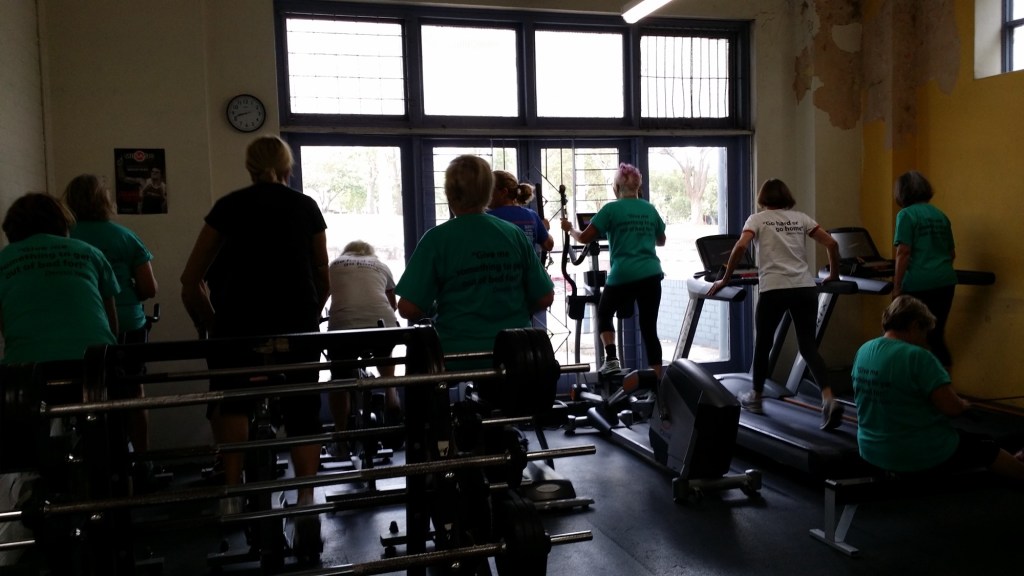
Retirees taking the time to build muscle to help themselves reduce the risks of age-related illness by working out in a group – setting to off-set the on-set of ageing”
We are all ageing.
We all lose strength & bone 🦴 mineral density as part of the ageing process.
We are all ageing.
We will die eventually. Nobody gets out of life, Alive.
I hypothesise that there is a direct observable CAUSE & EFFECT relationship between a person’s MOBILITY & MUSCLE 💪 BUILD & STRENGTH.
My understanding is that There is a 1% decrease in strength every year after the age of 25, more so in females than in males. By the age of 60 you would have lost > 30% of your strength and bone mineral density (oesroporosis).
This is largely a preventable cause.
My tip: do weight training (progressive)to “off-set the on-set “ of ageing. We are depreciating but the depreciation rate affects the “effective useful life of the non-current asset”(accounting terminology and analogy) from my 10 years as An Accountant/Business Consultant.
Every person has a body they are inhabiting that depreciates/ages at a different rate. Some faster than others. You come across individuals that look and behave older than their respective age.
Combined with a suitably balanced nutrition plan to suit you (age, activity level, body type etc), cardio exercise & a flexibility program, you can slow down the ageing/depreciation rate.
This would have a positive flow-on effect on the life that you’re living.
For example, the risk of living your retirement years with high susceptibility to fractures and breaks of Bones 🦴 would drop significantly.
The risk of Experiencing severe mobility issues that restrict the scope of your activities will increase. These can have severe consequences on a person’s health.
It could contribute to rising mental illness rates leading to suicide, dementia etc.
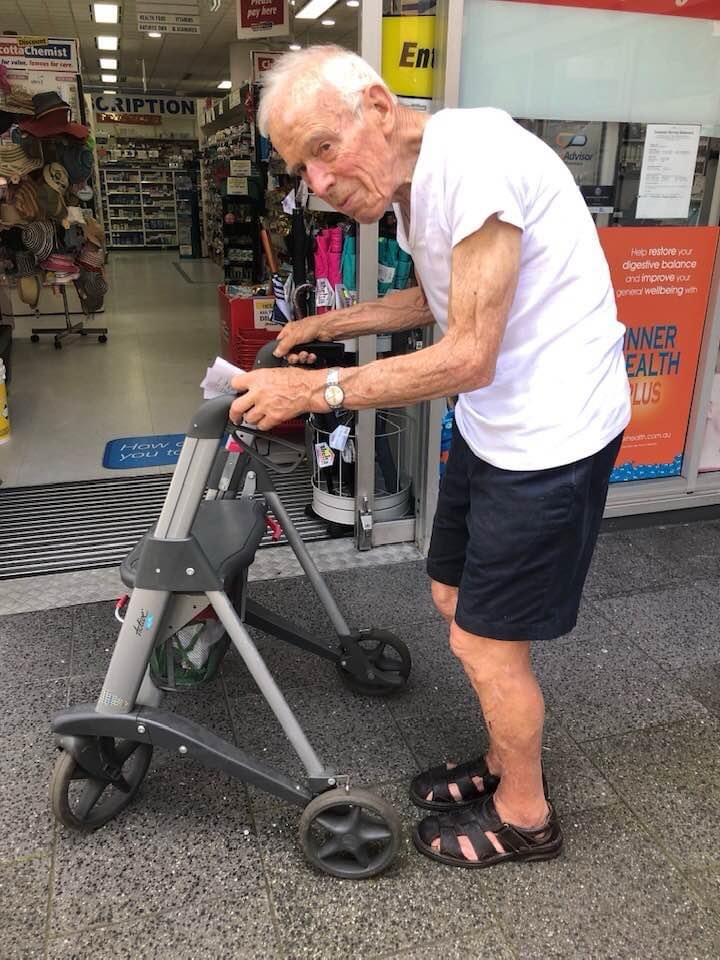
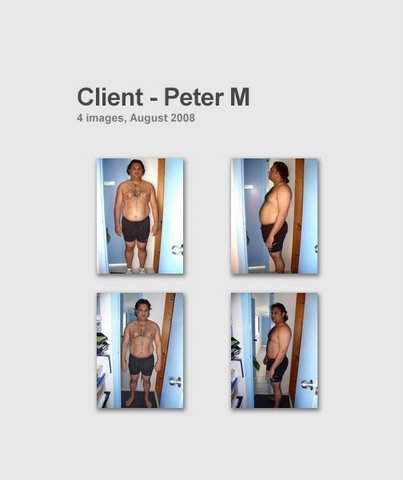
Photo (above): don’t end up like this friend of mine in the photo… you have the power to do something about this NOW).
He regrets not being made aware of the benefits of weight training & soon something preventative in his early life
It affects your mental state
Ultimately, it (immobility) affects your mental state and put you into a negative mindset. Over 25% of the aged population who have hip surgery due to falls die within a year. That’s great for doctors and surgeon’s pockets and lifestyle but disastrous for the poor individual
Change in habits now – begin the workouts you’ve been putting off and start eating 🍽 more balanced meals.
Your activity levels will have a significant impact on the QUALITY of your life, not just your length of life.
It’s never too late to start.
So… start… Just DO IT (love this original Nike slogan)
Life is about choices. Choose well.
It’s your ONE ☝️ LIFE after all (unless you have 9 lives like a cat 🐱… meow!!)
Cheers 🍻 & ahoy!
The Old Captain Viking Pirate 🏴☠️ ⚔️Muscle 💪Monk ⚔️😎 …& thoughts on ageing & mobility issues & its relationship with Muscle
We ALL need to summon the Superhero within to build & hang on to as much muscle as possible to stave off the early on-set of ageing-related illness
In my experience in the Health & Fitness Industries over the last 3 decades, I have found that the decision to include mega-loads of cardio or hardly any at all swings through the bodybuilding culture like the pendulum of a clock.
“Bodybuilding “ here includes anyone (from the skinny teen all the way to the grannies in the 90s) … who use weights of any kind to build muscles/strength and/or attempt to change their body shape.
There’s a new fad with a new name every few years or so, backed up by some new (limited) study and an awareness marketing campaign led by some famous ‘celebrity’.
Many who favour cardio claim that it allows them to eat more. That is good, right? Eating more is anabolic, isn’t it?
On the other end of the cardio spectrum, supporters of LESS CARDIO insist cardio is the most catabolic thing that can be done. They claim that it has to be avoided.
I won’t pretend to try to solve this dilemma but I will give you some facts, as I see it and have experienced it. Hopefully, it takes you closer to the doorstep of your ultimate condition.
It’s your BODY SHAPE, not BODY WEIGHT that MATTERS most.
The 80:20 Principle.
First, let’s clarify what is the actual goal in terms of physiology?
Based on one of Nature’s Principle (the 80:20 principle), the vast majority of “fat” in our body (over 80%) is collected in one form and stored in body fat cells.
The process that the body uses to consume this energy and effectively get rid of it – is called lipolysis.
I’m going to try to detail the mechanism of this process with exercise (avoiding diet for now).
In my experience of helping hundreds of individuals over the years is that I find that The difficult part is when : we have to apply these “truths” to the many different circumstances and body types that we find in the sport of Physique Artistry/Bodybuilding.
Become better at “being comfortable at being uncomfortable “ to keep your pendulum ticking … & your life, living
Everything is hormonal-driven.
Activity-related hormones epinephrine and norepinephrine speed up lipolysis greatly.
When we start working out, we firstly use the readily available energy in our blood, called GLYCOGEN. The body starts shuttling out these glycerol and fatty acids (fat) from our body fat cells.
research shows that the greatest increase in fat usage starts immediately upon exercise, hits a peak level within 5 minutes, sharply decreases, by the 15-minute mark starts to plateau, and within 30 minutes is back almost to a rate matching a control group.
So, what do we do with the common knowledge that carbohydrates (blood sugar/glucose) are used exclusively for the first 15-20 minutes of cardio?
As most of you are aware, blood sugar is the dominant source of energy used by the cells of our body at the start of exercise. As you do cardio, the body digs into longer-term energy stores, the liver (through the action of the hormone glucagon) starts pumping out stored glycogen and as described, body fat cells start releasing glycerol and fatty acids.
The question we then ask ourselves is – does the liver run out of glycogen? When it does, what happens then?
People ask – “why?” … I /My curiosity continually askS “why not?”
Seek possibilities… always
As long as Body Fat is available …
It is quite obvious that When we are exercising, we are moving the body towards an Energy Deficit.
My understanding is that the body & in particular, The liver, tries to contribute to the energy deficit.
How does it do this?
it does so by converting amino acids into glucose. I’ve learned that the liver has a reservoir of aminos available. Despite this, this process is STILL a catabolic phase. And what is “catabolic?”
Interestingly, though, even during the harshest, longest bouts of exercise, studies show that only 3 to 6% of energy is consumed from amino acid use.
As long as fat is available, the body spares protein as if it were the most precious commodity it has. Nice to know the brain agrees with us on that one. We need to dig a little deeper to get a better understanding of how the body tends to operate.
There are many variables we need to bring into the equation before we even address things like duration, frequency, and intensity.
Even a small percentage of amino acid use can add up if it’s a repetitive occurrence. I also mentioned “as long as body fat is available”…
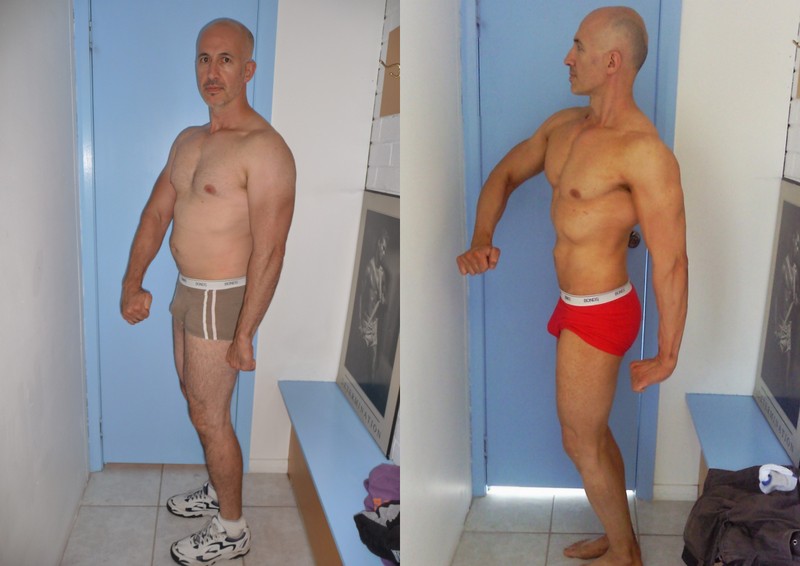
Same weight. Different body composition. The right has higher Muscle: Fat Ratio. L: 15% body fat. R: 6-% body fat.
Body Type.
Many individuals don’t get to that stage (under 10% body fat) to worry about not having sufficient body fat available to be used as Energy, during exercise.
The variable of BODY TYPE is an important consideration when deciding HOW MUCH CARDIO an individual should do. There are 3 main body types – ectomorph, mesomorph and the endomorph.
In my experience, An Ectomorph, has to have a healthy fear of “too much” cardio since they will be at the top end of the population in terms of using amino acids for energy. The more, the better, in their case.
In the middle of the spectrum, those that lose moderately slowly (like me) need to understand that muscle preservation is their greatest asset. We need to see cardio as a very necessary part of their daily habits and any kind of preparation for competition.
It has been and still is, a KEY daily habit of mine.
On the other end of the spectrum, you have the Endomorphs. For these individuals, more, rather than less cardio is the way to go. They usually have a lower metabolic rate to begin with and tend to carry a very high level of fat deposits.
The more cardio, the better.
The Rate of Lipolysis.
Here is where armchair interpreters of research often start showing that it takes more than throwing some big words around to master the subject.
KEY FACT: The rate of lipolysis is virtually unchanged whether we’re at just 25% of our VO2 max or 85%.
That means that whether you’re walking on a treadmill or slamming out 30km/hour sprints, your body is releasing the same amount of body fat to be used.
Before you say, “Aha!! I knew that slower, longer cardio sessions were the right thing to do,” don’t!
You first have to differentiate between just releasing fat to be used and actually using it.
If you maintain a slow or high pace, a percentage of the energy will come from your fat cells . That’s a given.
In the case of the former, even though the body is releasing fat to be used, when it’s not used, it simply resynthesizes the glycerols/fatty acids and re-stored as body fat.
So, we then ask other key questions like:
1. Due to a slower rate of usage, should one just perform a longer duration and ultimately use the same amount of calories as someone doing a shorter but harder session?
2. Which will use more body fat and which will be less catabolic?
You should Keep in mind that the body has a vested interest in using these fatty acids for energy.
It doesn’t take a rocket scientist to deduce that Glucose and glycogen (the energy currency of our body & brain 🧠), aren’t in endless supply.
It’s obvious that when activity levels increase, the body needs to turn not only to its larger material source of energy, but it wants to be efficient at it. Remember that – it wants to be EFFICIENT AT IT.
As the RATE OF LIPOLYIS is increased, so is the blood flow to the exercising muscles, and so are the chemical processes that convert the fatty acids into usable energy.
TWIST IN THE ROAD.
Here is yet another twist in the road.
As intensity increases, these glycerols are used at a higher rate – a good thing. But, when exercise intensity reaches a level where blood flow is necessarily shunted more sharply to the working muscle tissue, blood flow to the available fat stores is restricted tremendously, decreasing the rate of fat that is made available to be used as energy.
That is why I tell all my former students that the OPTIMAL TIME to do cardio & burn more fat is first thing in the morning, upon waking and … on an empty stomach.
Like I said earlier , If we perform light cardio we release just as much body fat as high-intensity work. What is the risk of losing muscle here?
Answer: the risk of losing muscle is low.
However, but then due to a slower rate of fat usage, we simply re-store the released body fat.
So, you may be thinking – “why don’t We just do longer sessions of low-intensity cardio?”
Yes, you could but it would not be the most effective use of your time. And why?
Well, research shows after 30 minutes, fat release actually decreases – not increases as conventionally taught.
Trying to keep every variable straight is like trying to catch a greased pig. It’s like the squirrel in the animated movie Ice Age; as soon as you stick every available finger and toe in the leaking wall of ice, another confusing point of physiology springs out of a new crack.
No wonder there isn’t a consensus on the subject.
As I mentioned in the beginning of the article, you would be making a mistake if you take this article as covering every facet of the subject – think of this as just an outline and the book isn’t finished.
Seeing your progress, any progress, however small, is a motivating factor.
ACTION PLAN.
Read on for an action plan…
The ease of your body’s ability to burn body fat will affect how much cardio you do. This is depended on your body type & genetics.
Being that all of cardio is catabolic, you want to do the least you have to in order to be shredded.
For some that may mean twice a week and for others that may mean twice a day.
Consider two glaring facts:
One: Your body immediately starts releasing body fat with exercise and continues for 30 minutes until the law of diminishing returns virtually eliminates any further benefit.
If we are going at too slow of a pace, the released fat gets re-stored and if we get too high in our intensity, we shunt blood flow away from fat cells. As such, I believe, there are two types of cardio that we can benefit from and still meet our goal of sparing as much muscle as possible.
The first is thirty-minute sessions at a good pace – heart rate sustained at 130-150 beats per minute for most people. Remember, even at just 25% of our VO2 max we’re going to be releasing all the body fat that we can, but we need a pace that will actually use what is released, but not so much intensity that the body goes into a fight-or-flight mode channelling blood to the muscle tissue systemically and away from the adipose cells and organs.
The best natural bodybuilding athletes/champions know and understand how to do this better than almost everyone. Their “Double-edged sword” of keeping /maximising muscles and maximally losing fat is the challenge /opportunity.
I also believe the value of super-high-intensity cardio is tremendous but you have to weigh the catabolic effects and the fact that it won’t take long to be counterproductive and decrease the amount of fat actually being released (due to the changing blood flow patterns).
I would recommend using high-intensity sessions 1 to 3 times per week for 15 to 20 minutes to create longer-term fat usage through the increased metabolic effects.
Ectomorphs may have plenty by doing just 10-minute high-intensity sessions, but even endomorphs shouldn’t do more than 2 to 3. The amount of actual leg muscle recovery necessary should be a limiting factor – you’ll need to recover almost like a leg workout.
A major turning point in Alan’s life was coming to me for help. I helped him, help himself … build his bridge from where he was to … where he wanted to be.
Saved his job … saved his marriage … saved his life.
Base-line
The “baseline” 30-minute sessions could be done daily or even twice a day for those who lose weight slowly or have more lower body stores to contend with.
That doesn’t mean that longer, slower cardio is worthless, you just get a fraction of the fat loss after the first 30 minutes.
Breaking up an hour of cardio into two sessions can net more fat loss if the pace is high enough and consistent. This is what I do. I try to do 30 minutes walk in the morning on a treadmill and another in the evening if I have the time.
The great thing about human performance research, however, is that we’re still very much in a pioneering phase.
Studies conducted with different variables keep adding to our understanding and more specific information is sure to be discovered.
And what class of foods would fall in this group – yep, you’re not wrong: vegetables.
This includes all the green vegetables, all shades of green. Some good examples include – broccoli, spinach, asparagus, cabbage, long beans.
Obviously, the darker green it is, generally, the better for you. I should also include fruits that are in the shades of yellow to orange in this tip also.
Total estimated time so far (previous top 2 tips) = approx. 8 minutes.
Add: green vegetables (this tip) = approx. 2 minutes.
Estimated time taken out of your day = approx. 10 minutes!
Why is eating greens (or yellow or orange fruits) important to your life? What value could it possibly pass on to you?
Well, besides being natural sources of vitamins, minerals, antioxidants and other nutrients, they tend to keep you fuller – for longer. This helps you curb your appetite throughout the day and from snacking on ‘junk food’. Yellow, orange and green fruit and vegetables offers your body and mind multiple nutritional benefits.
Educating a top national sprinter of the importance of proper nutrition for recovery & optimal performance
Lets have a look at a few of these fruits – bananas and oranges for example. Their yellowish-orange pigmentation have been shown to slow down the ageing process and also reduce risks of some types of cancers. Bananas are loaded with potassium and magnesium which reduce the risk of muscle cramping.
This is especially important for anyone who trains with weights in the gym. Potassium and magnesium assist in the muscles extending and contracting properly and are essential for maximising muscle performance.
Obviously, not all yellow-orange fruits and vegetables have the same sugar content and don’t all have the same impact on your insulin levels. Lets keep it simple, if your body transformation goal is to lose unwanted fataround the butt and belly then:
** stay away from high – sugar or High Glycemic Index (GI) fruits and vegetables.
Some examples include: pineapples, yams, corn and carrots.
Instead choose options which include low to moderate GI, that is foods that have more complex carbohydrates and does not ‘spike’ your sugar levels and keeps your insulin steady. Some examples include: grapefruits, mangoes, oranges, paw-paws, peaches, pumpkin, capsicum and tomatoes.
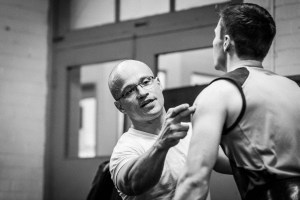
A good teacher is hard to find but finding a good student is even harder. Plan the work – to work the plan. Photo: discussing fine points of one of my programs with retired legend of rugby – Phil Waugh.
Eating in a way that does not encourage fluctuations in sugar and insulin levels is critical to body transformation and weight management. Like I have mentioned before, the key to body transformation is hormonal management – specifically, insulin management.
Make time to eat properly
When insulin is under control, your body’s drive to store fat is minimized and under control too.
So, there you have it! Tip # 3 of my series of Top Ten Tips to being in Tip-Top Shape come summer. The awareness of these top 3 tips is one thing.
Application is the other pillar. Adaptationis yet another. The philosophy of my blog.
So, as you can see, to implement these top 3 tips, it should not take you any more than 10 minutes out of your day. Now, of course you can spare 10 minutes.
My goal is to not only inform you but also to show you how Eating Right actually takes less time than you think. Matter of fact, one of my goals is to show you how the application of my Top Ten Tips should not take more than 30 minutes or 1800 seconds out of your busy day.
Make the time to eat properly.
It might not only add years to your life, but along with consistent weight training and regular cardiovascular training, may just add more life and zest in to your years.
Its your choice. Your life, after all.
Good luck in your decision.
Until next time,
Cheers & ahoy!
The old Cap’n Viking Pirate Muscled Prophet … & eating well and time
Planning my meals and cooking meals in advance (in bulk( allowed me to build a Physique worthy of standing against the best in the world. Efficiency in the preparation and timely consumption of meals is critical to achieving the physique your aim to create.
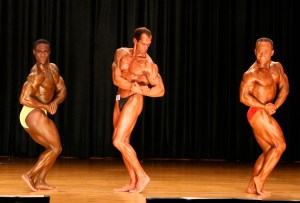
World Natural Bodybuilding Championships. Side Chest pose. Managing your meals allows you to build the best physique you can. Attention to detail and time, matters. Placing: 4th.
The title does not refer to what some of us did in our youth with beer and the various other types of alcohol. No, I am talking about: water, and consuming more of it.
When you wake up, go to the toilet and relieve yourself first thing, drag yourself from the bathroom to the kitchen sink and pour 12 glasses of water (approximately 250ml per glass) in to a larger flask or water bottle. The water bottle should be able to hold 3.0L of liquid, in this case – water or H2O (for the chemistry inclined).
Approximate time needed to do this:3 minutes or 180 seconds.
Can you take 180 seconds out of your ‘busy’ day to do this very important task? You bet you can! This is the 2nd Tip to “Tip-Top” shape and all it takes is 3 minutes.
So, back to my previous blog, when we add the 3 minutes to the time it took to do the first habitual tip (which was less than five minutes), you have an accumulated total of 8 minutes. Yep, eight minutes to invest to a more healthier – YOU.
What to do after you’ve filled the water bottle? Put it in the fridge to cool. Why? Because, you are going to take it with you to work and be ready to drink from it throughout the day until you finish it.
Why is this tip valuable to your body and worth your time investment?
Water makes up more than sixty percent of your body’s mass. It is vital to your health and vitality and without sufficient water intake, you could put your life at risk. If you didn’t know this, sometimes when your body tells you that it is hungry, a lot of times, it is actually asking you for more water. It is telling you, you are thirsty.
Why? Well, if you are not aware of this, the body does draw a lot of its water from the food you eat.
So, when you constantly sip water throughout your work day, in addition to its health benefits, you will feel fuller. And when you drink before, during and after every meal, it reduces your appetite, especially during the rest of your day.
There are many studies done on what the recommended daily amount of water an average person requires and generally, there is a consensus that a person should drink anywhere between 8 and 10 glasses (250ml) per day. Great!
The question I would like you to ask yourself is this: are you currently drinking that many? Be honest. I am certain that many (maybe you included) are not drinking anywhere near the recommended daily allowance.
If you’re staying physically active (and I am presuming most of you reading this are active), having a little bit more (12 glasses) is wiser, giving you a little buffer for the additional energy output you expand during exercising.
Most of you know that the moment you realize that you’re thirsty, it’s a little too late. The body, by that stage has already lost approximately 4-5% of its total water. Now, you should note that your energy output is heavily dictated by the amount of water or hydration level you have at any point in time. Losing just 1 percent of your body weight in water (approximately 1kg to 2kg) can decrease your overall energy output by as much as 20 to 30 percent.
Now, that is a significant reduction in potential energy output. It will affect your vitality. You will notice this lack of energy in your training sessions. You can see that dehydration puts unnecessary stress on your body, on your organs. Your body goes hunting for water in other places – within the body itself. Where do you think it will find water? Yep, you guessed it – your kidneys, your stomach, colon and also, where you least want to lose it – your hard earned muscles.
All that muscle you have been working hard in the gym for months. Years, perhaps. Being catabolised. Not good. Not what you desire. You want to work hard to build muscle and then hang on to whatever muscle you have. Muscle is precious. Preserve it as best you can from it been cannibalized by its own body.
From a health point-of-view, your organs are put under unnecessary stress than it already has and does not work at its most effective and efficient selves. Your brain requires adequate water to allow you to focus and think at its optimum. A lack of water can also relate to recurring headaches and migraines. I have seen a reduction in these ailments over the years with my clients, the frequency and intensity of such drops.
From a muscle point-of-view, muscles that don’t have sufficient water will mean that your lifts in the gym due to a reduction in your strength levels. This would mean a less than your best effort which would translate in to less potential for muscle growth. No growth means no progress. No progress ultimately leads to an empty, unhappy feeling in your gut. This remains true not only for muscle but for almost all areas in our lives – not experiencing a step-by-step progression towards whatever goal you are working towards.
No progress – you get de-motivated. Progress – you feel motivated. The latter feeling is preferable, I believe.
We are all ‘goal-seeking’ animals, so make this 2nd Tip of my Top Ten Tips to a healthier you a part of your daily life. Take action and start making this habit a part of your life. Today. In a week, see how you feel.
It takes approximately 8 minutes of your day to carry out these two habits. Give your body, your life what it needs. Simply, because you’re worth it. The compound effect of making these two tips habit is contribution to a better quality of life in your future.
You’re now Aware. Apply Action. Adapt accordingly.
I have helped hundreds of people of all ages re-engineer their bodies towards a stronger, healthier, fitter version of themselves over the years with over 84% success rate in clients’ achieving their goals. Weight-loss has always been a by-product of the transformation using my framework to body re-engineering.
It is important but it has never been the main focus for me and I’ll tell you why I have never believed in losing weight just for the sake of losing weight. Weight loss is a losing game, I know but most people go about loising weight the wrong way.
Be the best you can be for you, first, then by default, everyone gets the best of you. Vv.
The importance of composition
The weight scale can be misleading because it tells you nothing about your body composition. Your weight can fluctuate quite a lot on a daily basis due to many factors – your water intake, temperature, time of day etc. It has been the catalyst for many trainees being disheartened and de-motivated on their journey to a better version of themselves.
Avoid rapid weight loss because that usually accompanies muscle loss and you cannot afford to lose muscle. Avoid diet-only transformation programs that does not incorporate strength training. If you have a lot of fat to lose, and if you choose not to get an experienced personal trainer to help you, the best thing you can do is combining a well thought out diet plan with a good progressive strength and cardiovasular and stretching routine.
With self-control, discipline, consistency and persistence you may lose say, 10 kg on the scale over 6 months. A safe and sure way. But note, that would be the net effect of actually losing 13 kg of fat and gaining 2-3 kg of muscle. Like for all my clients who go through my re-engineering programs, this way of weight loss will have a significant effect to your appearance, fitness and well-being: your body shape.
Rely on YOU.
The additional muscle gained enables you to use up more energy even at rest. The benefits go far beyond the initial fat loss and mere aesthetic measures as there are improvements in the inter-cellular and intra-cellular levels in your body and this would help reduce the tendency to store fat.
Educating a top national sprinter of the importance of proper nutrition for recovery & optimal performance
The best you can be
So, the better your condition gets, that is, putting on more muscle and losing fat, the easier it is to lose further fat and maintain a lean body once you have shed the excess fat. You body goes about maintaining a new ‘state of balance’, a new equilibrium: a new YOU.
Don’t go on extreme weight-loss diets, don’t fast to lose weight and don’t go on a fad diet and we have had many come and go over the years. When you limit your food intake extremely without proper resistance exercise, your body will respond by slowing your metabolism or ‘engine room’ and this makes fat loss more difficult and fat gain easier. Your engine room dictates the amount of calories you burn at any point in time.
You then find yourself spending more and more time on treadmills and other versions of cardio machines in gyms. You’ve seen the countless numbers pounding the conveyor belts of these machines in the gym. This all leads to losing muscle you cannot afford to lose.
Target a weight loss of no more than half kilogram per week, which under the right training program can add up to 13 kilograms over a realistic and healthy time-frame of six months. Do this safely.
Don’t be the best ‘biggest loser’ you can be, be the BEST you can be!
Sometimes a feather can feel heavy when you are FOCUSED on the essence.
Strive for an improvement in body shape, get closer to getting an ‘x-frame’ (which means a smaller waist and from a health point of view means you carry less visceral fat around your waistline which all medical advice say decreases your health risks).
You should not do it with diet alone. You must build muscle.
Control fat by building more muscle. Muscle burns fat, its as simple as that!
Until next time,
Best of Vitality and ahoy to YOU,
The old Captain Viking Pirate ,…. & thoughts on muscel and body shape and the ridiculous focus on weight loss ( I love meaty women!)
Each rep of every set of every exercise is an opportunity for a person to connect with the muscle group he or she intends to. The right mix of tempo, control, continuous tension and feel is critical. Executed properly, under an experienced eye, allows one to bridge the muscles with the mind. Practise does not make perfect. PERFECT PRACTISE MAKES PERFECT!
Education through a perception of the truth. To be the best in a particular field, you need to seek help from the best. Champions help create & develop the champion in you. [Photo: Former Australia Wallabies Captain & current CEO of Australia Rugby, Phil Waugh transporting himself to his Best Self in his tailor-made Peak Performance program
Regardless of your age, or how out of condition you think you are at the present time, it is never too late to start an exercise program. You just have to change your philosophy on your life, with a more caring attitude to YOU.
The older you are, the more important it is that you exercise. All the science research points to this. It is a no-brainer. What older people cannot afford to lose is the little muscle they still have that assists them in their daily lives and mobility. Its simple, like most things in life: “use it or lose it, but don’t abuse it!”, which applies to all ages.
Some studies show that there’s a typical loss of about 1% of muscle mass or lean body mass (LBM) per year from about age 50. There is a slight increase after 60 and by age 70, there may be up to a loss of 25% relative to what it was at age 25, depending on the individual and if there’s been no strength-training in their lives. What a scary thought, isn’t it!
Loss of muscle LBM has many negative impact on peoples’ lives: strength declines, reduced metabolic rates, postural problems, reduced fitness, increased tendency to lug around unwanted bodfat, weakened resistance to injury and illness and deterioration in physical appearance. Another big consequence in old age is a significant reduction in mobility, partly due to weakened skeletal muscles. And that’s only a few likely negative consequences.
I have been doing strength training for over 23 years now and have helped hundreds of people of all ages with their body re-engineering goals, with over 80% success rate. I believe strength training is one of the most important things you can do for your appearance and health. Strength training is critical for building muscle, maintaining muscle or more importantly, minimizing muscle deterioration and atrophy.
Results with care. Here, Brad is ‘feeling the essence’ of the exercise and inching closer to his best self. Vv
Muscle is like precious gems – you need to build it and then preserve it. It is the fountain of youth, yourmagic youth potion.
Stronger muscles produce health benefits that adds to your life. It builds your sense of vitality. Building muscle contributes to reducing the impact of ageing. Strength training helps you stay young for your years. However, strength training is not enough. One needs to combine it with regular structured stretching, consistent cardiovascular work, healthy nutrition, adequate rest and recuperation and a healthy lifestyle.
All this helps you off-set the on-set of ageing.
I have seen them, so perhaps have you. People with that glow. People that are filled with that life-force, that all-important sense of vitality. People who seemed to have gotten closer to the fountain of youth. Most, if not all of them, have consistently and persistently worked on their strength training.
They’ve simply decided to build muscle. No more thinking, no further analysing. They just DID IT. They took action. Think about it – you’re made up of more muscle than anything else. I mean you’re covered with skeleton muscles (that help you move and do what you do every single day), your heart’s a muscle and your stomach’s a muscle too. What do muscles do? Keep it simple … they need to work. It makes sense to ‘work’ your muscles then, doesn’t it?
Muscles are one of the very things that keeps us all alive. But hey, if slowing down the ageing process by building muscle is not convincing enough for you what about if I say that it could help you lose fat. Yep, that’s right, do you want to lose unwanted fat? Well, build muscle. Period!
There are so many organizations and people in the world today that give out fat-loss diet plans that don’t include strength training. This is not ideal. It robs the body of the little muscle it has, making fat loss even more difficult because of reduction of one’s metabolic rate.
This is so common today in many weight-loss programs all around the world, where individuals think that some new ‘fad diet’ will be the answer or some magic supplement. It does not work that way. “That way” is not sustainable and is a huge reason for many victims of the ‘yo-yo’ diet symptoms and millions of dis-illusioned and disappointed individuals with the best of intentions.
Executing an exercise for maximum benefit and minimal risk takes a lot of practise, Just like genuine friendship, genuine muscle requires a lot of work and time. Remember: practise does not make perfect. Perfect practise makes perfect.
Building muscle is the only way you can improve your body-shape and this is achieved through progressively increasing your muscle-fat ratio.
Have a go today, if you haven’t done so already – start a structured strength training program for the most important person in the world to you – YOU. That way, the people that depend on you – your spouse, your kids, your employer, your clients – they get the BEST YOU too. It could be one of the most important decisions you will ever make in your life. More important than the dream house you intend to buy one day. Build that dream house in you, first.
We’re all reminded that people are living longer now. What’s more important I believe is adding LIFE (vitality) in to your years, not just adding years to your life. Most aged people spend the last 20 years with various levels of discomfort and immobility.
Remember though: when you exercise, try to do it as efficiently and effectively as possible, under the safety umbrella. And, don’t try to do everything yourself if it isn’t your area of expertise, you can sometime do more harm than good to yourself.
Let go of all self-imposed limitations and fears and ask for help. It takes a lot of courage to seek help from an appropriately skilled professional with the relevant experience and credentials.
There are a lot of excellent exercise professionals out there, those who give you the results you desire – with care.
Best of luck!
Until next time …
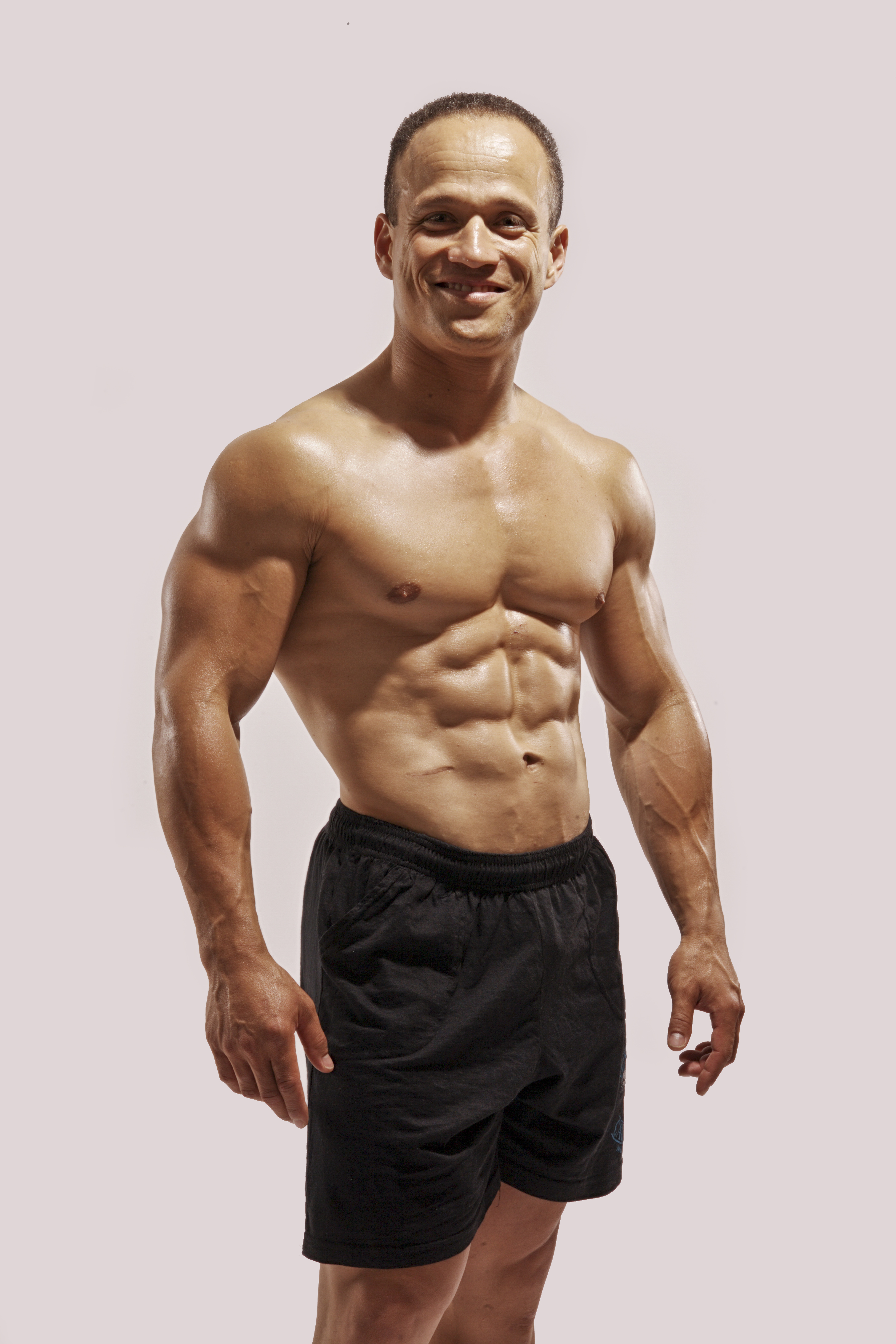
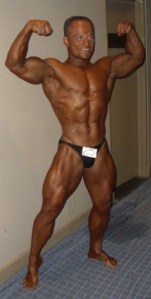
In the heat of competition. Pose name: Abdominal/Thighs. Place in contest: 1st.









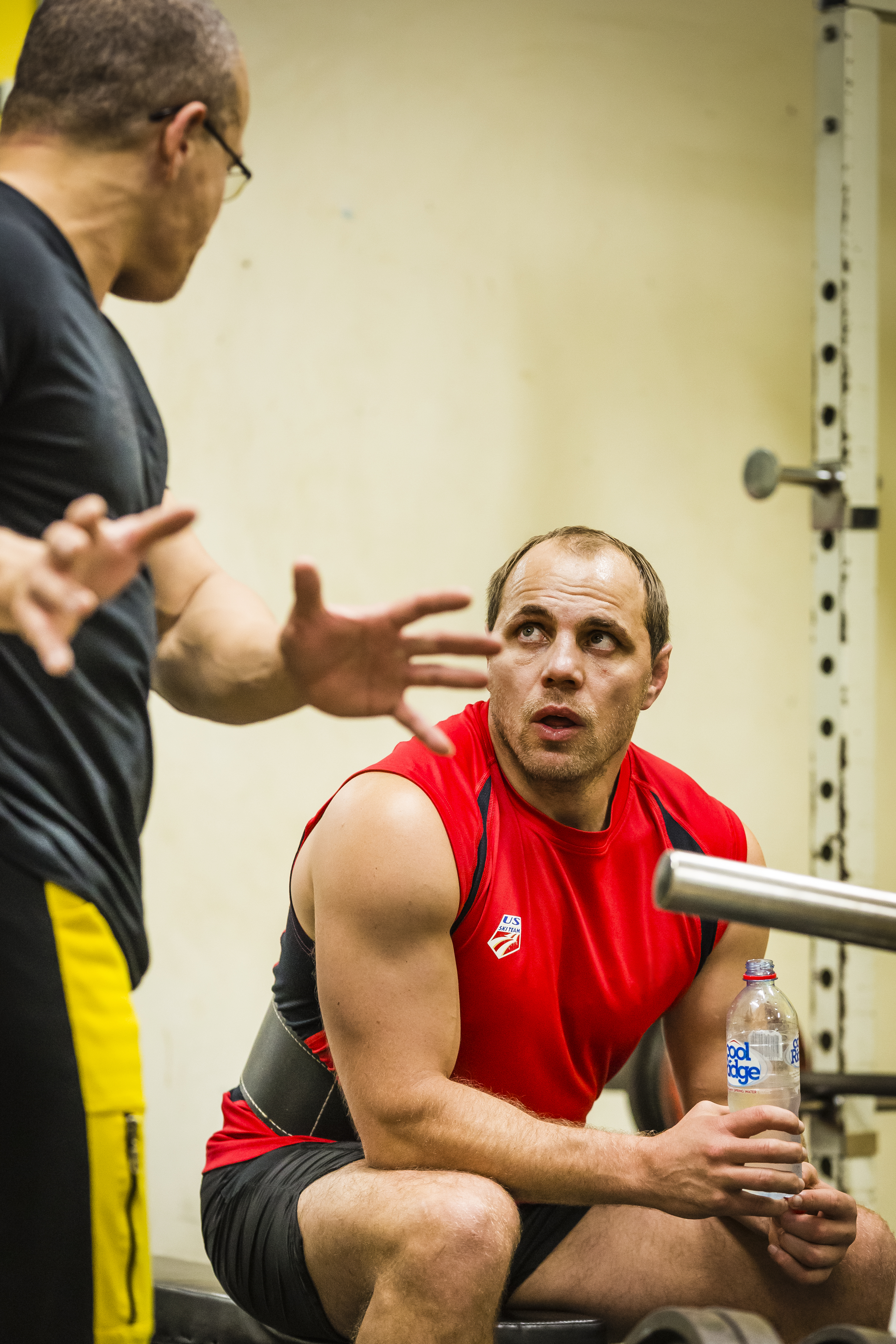

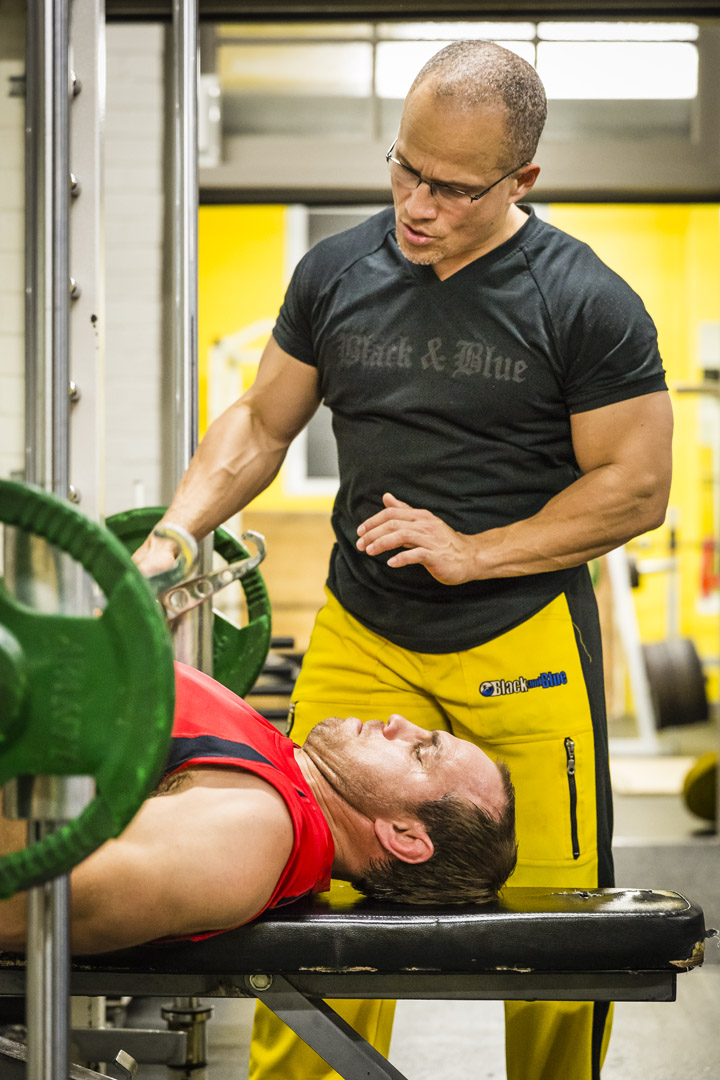


 Changing lives. Empowering people. One life at a time.
You must be logged in to post a comment.