a better life, adaptation, awareness, balance, basics of training, beauty, Body shape, Energy, Fitness, fundamentals, habit, habits, injury, long-term perspective, muscle building, safe training, strengths, symmetry, training, workout, you

My Top 5.5 Tips to avoiding injury.

Education through a perception of the truth. Increasing your awareness, taking sufficient and appropriate actions and adapting accordingly is key towards self-improvement. Vv

Education through a perception of the truth.
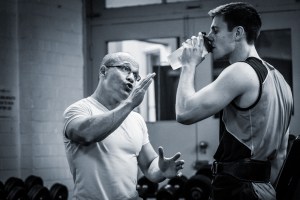
Increasing your awareness, taking sufficient and appropriate actions and adapting accordingly is key towards self-improvement. All done in my programs. I love 💓 helping people who strive to help themselves by increasing their awareness… of the power & ❤️Itality within themselves. It’s never too late to learn and UN-learn bad gym (& lifestyle ) training habits learned in different phases of life. Photo: Former pupil – ex Australian Rugby Union Wallaby Captain – Phil Waugh embracing new knowledge. Having a Growth mindset. 
Vv

I have been very fortunate that in over twenty three years of training in the gym I have not been seriously hurt in any way. I am very proud to say that in that time I have not seen a physiotherapist or chiropractor for any training-related injury.

I have always been a stickler for form and ideal exercise execution. Always. Accelerated increased awareness from the guidance from some of the best coaches in various fields such as martial arts, power-lifting, boxing, athletics, squash, soccer, hockey, rugby and resistance-training has also contributed heavily to me staying injury-free.

Mastering the basics in any physical endeavour is paramount to you excelling in and enjoying the experience while doing it. Everyone that I have ever helped over the years get educated in applying the basics of training all the time – not some of the time! This loosely applies to most worthwhile goals in life.

Getting injured is a pain. Apart from the physical pain, one has to endure days, weeks or even months of re-habilitation. It can drain one of mental and emotional energy too and be quite costly if the injury is very serious.

Hey, there are many professions that thrive on you getting injured – physiotherapist & chiropractors are two. So, if you’re stubborn in your old habits … just keep doing what you’re doing … & “open your wallets” to them.

Over the years, I have adopted certain routines with deliberate practise (habits) that I believe decreases my chances of getting injured while training in the gym.

Below are 5.5 key tips to help you lower your risk of injury:

Tip # 1: Aim for balance & symmetry.

My whole goal from the very first time I lifted weights was to build a more balanced and symmetrical physique. I believe this is one of the main key factors in me staying injury-free all these years. This is despite me lifting relatively heavy weights for most of this time (especially the two years when I trained for the World Championships in New York).

For example, a lot of people train the ‘mirror muscles’ more than they do the muscle in their posterior chain (muscles you don’t see in the mirror). This leads to asymmetry and muscle group imbalances.

Not a wise thing to do.

Focusing say, on your chest and shoulders and biceps (the ‘show-me-your muscles muscles) and neglecting your upper back muscles like the traps and rear delts and middle back can spell disaster. The most common gym-related injury for young men world-wide are shoulder injuries primarily because of this.

Muscle imbalances lead to increased risk of injury in the respective joints and muscles.

Besides, why do you want to be the strongest or biggest guy when you can build the most balanced and symmetrical physique for your frame. This is more aesthetic and more pleasing to the eye.

So, leave your ego at the door and work towards a better shape – a more balanced and symmetrical physique. If you don’t, you may regret it later.
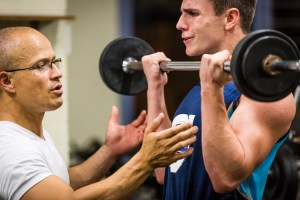
Results with care. Here, Brad is 'feeling the essence' of the exercise and inching closer to his best self. He is in total control and 'feels' the muscle being worked. Vv

Results with care.
Here, Brad is ‘feeling the essence’ of the exercise and inching closer to his best self.
He is in total control and ‘feels’ the muscle being worked.
Vv

Tip #2: Be aware of your breathing technique.

I believe incorrect breathing technique is one of the main contributors to getting injured when training in the gym. Keep this in mind – for:

Pushing motions (bench press; shoulder press) – exhale at the point of contraction (when your arms are furthest away from you)

Pulling motions (lat pulldowns; biceps curls) – inhale when your arms are furthest from your torso.

Breathing also helps you with the next tip.
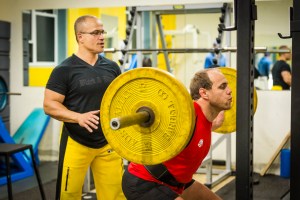
Ex-Australian Wallaby Captain - Phil Waugh performing a set of squats. Using good exercise technique(which includes proper breathing) is paramount to success.

Ex-Australian Wallaby Captain – Phil Waugh performing a set of squats.
Using good exercise technique(which includes proper breathing) is paramount to success.

Tip # 3: Focus!

Concentrating on your breathing and what you are going to do with the weight for those 15 to 45 seconds (a set) is critical to lowering your risk of injury.

Every fibre and cell in your body needs to 100% fully-focused! Don’t get side-tracked by other conversations and mentally block out all distractions. Focusing certainly aids you putting on good lean muscle. Period!

A slight loss of concentration could lead to less than ideal execution of exercise leading to increased levels of risk of injury.

I have developed quite a few formulas relating to peak performance over the years and one of the most important ones is:

“Focus = Results” (a shortened version of my formula).

Tip # 4: Always assess exercise execution with ‘risk:benefit’ ratio mind-set.

What I mean by this is that you need to increase your awareness of the exercises and work on improving your risk assessment of the exercise relating to:

  • Exercise choice and safety – a particular exercise that may be safe for someone may not be for another.
  • High-risk lifting – improper execution of certain exercises can increase levels of risk for very small increments in benefit. The range of motion of exercises need to be tied in to the ‘risk:benefit” ratio of the exercise and the trainee’s goals

Always avoid “high-risk’ lifting. This relates to variables such as excessive weights; excessive number of repetitions; excessive range-of-motion and so forth.

Tip # 5.5: Apply correct training principles.

I’ve always believed that building muscle is like LIFE. It relies on two principles:

  1. Simplicity
  2. Continuity

There are many principles to building and keeping muscle and after 23 plus years in the gym I have concluded that the two above and this next two principles – 3) control and 4) feel are key towards lowering your risk of injury.

All beginners and intermediate trainees or less experienced gym enthusiasts should master these before ‘going heavy’.

When you keep it simple and focus on the full range of motion of the exercise with continuous tension, you increase your ability to build good, quality muscle.

Because you are 100% focused and are using the right weight for you to correctly execute the exercise, you have better control and feel. This allows you to ‘work the muscle, not the joint’.

If you can’t control and feel the muscle being worked, you’re not building muscle, only ego.

A lot of people still aspire to the ‘No pain, no gain’ maxim but I think you should not follow this. Listen to your body: never do anything that hurts and don’t train if you hurt yourself or suffer from an existing injury.
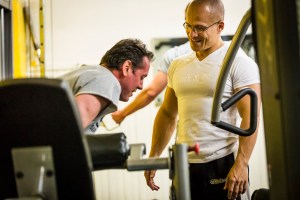
results. Vv. “> Chris enjoying a well-deserved rest between sets.
A ‘set’ as I define it is: a continuous progression of 15 to 45 sec ‘focused moments’.
Focus + heart + visualization ===> results.
Vv.

Most injuries happen over time, through cumulative effect of muscular discomfort and micro-scopic tares and inflammation of tendons and ligaments around the joints. Most injuries are the result of an imposed force exceeding the structural strength of the involved body-part.

Don’t copy the super-stars and genetic elite who look and train the way they train because most of the time you don’t know their full story and so this may give you a false sense of direction and could lead to injuries.

Those who don’t do away with the maxim ‘no pain, no gain’ and try to train like the super-stars usually regret it, sooner or later. A better maxim to adopt is ‘No brain, no gain”.

Strive to Train SMART. What I mean by this is that I have always promoted a more conservative approach to training. My own experience and what I have learned from observing countless other trainees – has taught me that a more conservative way to training is not only the most effective but also the safest way to train not only in the short-term but more importantly for your long-term health.

Strive to stay injury-free. You’re in the gym to work on making that person you see in the mirror (you!) – better. Not for ego.

You want to still be doing this activity and off-setting the on-set of ageing (by building muscle) well in to your 80s and 90s if you live that long. It will certainly add quality to your life. Like I have said before, Muscle is the potion of youth!

All the best in your training this year.

Embrace my Triple A to self-improvement: be more aware; take appropriate actions and adapt accordingly to reach your goals in life.

Cheers and Happy January to you!


Until next time,

Just like friendship, genuine muscle requires a lot of time and hard work to be built and sustained. You do this by adopting an 'adaptive strategy' of self-tuning. Vv.

Just like friendship, genuine muscle requires a lot of time and hard work to be built and sustained.
You do this by adopting an ‘adaptive strategy’ of self-tuning.
Vv.
Standard
ego, grip, habit, muscle building, training

What grip should you use when you train?

Learning how to properly execute an exercise with good form throughout the full range of motion is vital to muscle building and longevity.  Vv

Learning how to properly execute an exercise with good form throughout the full range of motion is vital to muscle building and longevity.
Vv

I was asked by a host of a function I attended recently about what grip was best to get the most out of your barbell bench presses?

Over the last two decades I have seen many variations of grips. I believe it is a matter of individual preference and your level of experience of training in the gym. If you’re a beginning gym enthusiast, it would be best if you used the ‘thumb grip’, meaning your thumb goes around the bar in the opposite direction to your other fingers, forming a secure grip.

If, however, you are more experienced and advanced, then using the ‘thumbless grip’ may be something for you. For those of you who are unfamiliar with the term ‘thumbless grip’, it simply means that you move your thumb to the same side of the bar as your fingers.

If you had to assess the risk of the two types of grips, the ‘thumbless grip’ is a much higher risk to you and possibly others close to your training station. I know of a man who injured his sternum doing a bench press using this grip. The bar slipped off his hands during a set of bench pressing and fell on his chest. Very painful, not recommended.

However, this risk is lowered if the bench press is performed using a “Smith Machine” or similar. The thumb grip is safer.

It can also be argued that it is more productive to NOT use a thumbless grip when performing an exercise like the bench press. However, how productive you are depends on many other variables and in the list of key variables influencing your productivity during your workouts, the grip you use would have to be quite far down that list.

So, to sum up, if you’re a beginner, DO NOT use a thumbless grip, especially if you do bench presses with free weights. Period! The seasoned campaigner can give it a try if you are using a smith machine to mitigate the risk of the bar falling on you or have a good training partner.

But, if you are in it for the long haul, the use of a ‘thumbless grip’ isn’t going to give you much more weight doing your presses. I think your focus should be on more important things like ‘feel’ and ‘control’.

Two principles of building muscle: 1) Simplicity and 2} Continuity. Here, Ex-Australian Rugby legend Phil Waugh using a 'thumbless grip' in a Smith Machine to do Bench Presses. Become aware; Apply action: Adapt accordingly.

Two principles of building muscle: 1) Simplicity and 2} Continuity.
Here, Ex-Australian Rugby legend Phil Waugh using a ‘thumbless grip’ in a Smith Machine to do Bench Presses.
Become aware; Apply action: Adapt accordingly.

I tell everyone that if you’re not feeling the muscle and not in control of weight, then you’re not building muscle, you’re just building ego. Learn to leave your ego at the door if you’re serious about building good quality muscle and re-shaping the body you see in the mirror towards the one you imagine yourself to be.

Focus on doing each repetition of each exercise properly. Do this repeatedly as best as you can. This includes doing the last rep as good as your first. Not some of the time, – all of the time!

Feel the ‘essence’ of the exercise ( … and it ain’t vanilla!).

When you feel you’ve mastered this and the BASICS, then, and only then, should you worry about what grip to use when you train.

Understanding the basics and the principles of simplicity and continuity are more important keys to your success in training.

All the best!

Until next time,

_MG_9779-1

~~Life & wellness COACH~~

~~Life & wellness COACH~~

Standard
accountability, action, adaptation, asking questions, awareness, Beliefs, better choices, body, boys, change, children, choices, courage, game of life, gym, life, long-term perspective, long-term strategy, love, muscle building, muscles, parenthood, perspective, planning, safe training, son, truth, truths, workout, workouts, your life

Is it safe for children to weight-train?

Working the guns.

Playing with weights is as safe for children as it is for adults. Like all things, boundaries and limits are to be applied.

I have been asked many questions relating to health and fitness and weight training over the last 23 years in the gym.

If I knew the answer to the question of when it is safe for children to weight train, I would be lying. However, after all that time and my love of deducing conclusions from simply observations of consistent trends around me, I would like to attempt to provide a solution.

I will use my powers of reasoning I have developed in my 40 years on this earth, so far.

Here we go ….

My son Zachary, doing weights even before he could all properly

Leading Legends

I am truly inspired by older generations who have maintained resistance training for most of their lives. Almost all of them look and feel like someone 10, 15 even 20 years younger.

“Leading Legends” – that’s what I call them. They are great examples of making it part of lifestyle.

Some of them used to tell me about how perceptions have changed over the last 50 years in regards to exercise in general and in particular – the many myths relating to weight training.

There were and still are many myths relating to weight training. There was a time when people were saying that weight training wasn’t good for women. Before that athletes like rugby players were told to stay away from weight training as it would ‘slow’ them down – this wasn’t too long ago – even in the 70s.

And even further back, it was even questioned whether weight training was in fact good for anyone at all. Times change and myths get busted. Myths are just that – myths and are meant to be dis-proven.

It is only in more recent times that the general public has accepted that weight-training is of enormous benefit to women too. I am so happy about the increase in women attending gyms as I have seen this landscape change quite a bit over the last two decades.

Now, my question is if weight training is now believed to be of enormous benefit for men and women, why shouldn’t it be good for children? After all isn’t exercise good for everyone?

My son Zachary would crawl around my Family Gym that I owned & managed for 7 years. He used to remove the pins from the machines to the dismay of the members

To weight train – you do one thing 

The truth or my version of ‘the truth’ in my straight-forward answer is that weight training can benefit any individual – young or old – who is healthy enough to engage in the activity. But that is just my opinion.

I have helped hundreds of people of all ages – kids under ten (including my children) all the way to people in their 90s. Human physiology is the same no matter what age. To weight train – you do one thing: work the muscles. To do this, you literally extend and contract that particular muscle under tension/force provided by the weight.

Simple. Right?

The very old and the very young and everyone in-between can do that. It’s what muscles are meant to do: to ‘work’ for you.

There are still myths relating to children training even in today’s world. The biggest fear amongst parents appear to be the possible negative effects on the development of children prior to puberty – that lifting stunts the growth of children.

If this was the case, the famous Arnold Schwarzenegger would should not have grown to 6’2” as he started lifting weights well before he hit puberty. I am not a Doctor but I believe this irrational fear is unfounded medically.

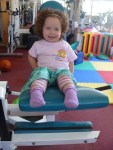
My daughter on the leg extension machine in my a family gym

How are risk assessments done?
My question is if weight-training was a height depressant, why is it that considerable growth can sometimes take place in the ‘post-puberty’ years. And if this was a medical fact, then, everyone should only start weight-training when their full height potential has been reached. For some, this would be well in to their early twenties.

The issue as I see it relates to the formation and growth of bones. I can understand the parents’ worries, including my family Doctor’s. From what I understand about what I have read about bones, the process of bone formation and growth is hopelessly complex and wonderfully simple at the same time.

If I recall correctly, Tiger Woods picked up and was training in golf from the age of 2 and was coached by his dad. Leytton Hewitt began playing tennis around the age of 3. Some top swimmers were undergoing stringent 4am early-morning training programs from a very young age, where parents were driving them to and from swimming pools. I know because I had good friends that were doing that when we were in Primary School.

Not many made the Olympics.

Is this any different to subjecting a child to some gym training under supervision in a gym? How is it that the perception of risk of a child in the gym is greater than that of a child on a soccer field, swimming pool, golf course or rugby field? What about a child playing tennis or netball? How are these risk assessments done?

I believe the risks to a child and his or her growing bones and muscles is higher with the other sporting activities compared to the risks associated with supervised structured weight-training.

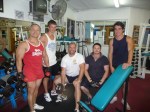
With some of the members of my Family gym
Playing around with some ‘light weights’ … that children can also play with

A better athlete gets better results.

In my opinion the risk to bones, joints and muscle development and overall health risk (injuries from knocks to the brain and head in Rugby or other contact sports) is greater to the young kids playing most sporting activity outside the gym, compared to structured activity in the gym. My assessment of risks of these contact sports is VERY HIGH to EXTREME, because of the repetitive knocks to the head and recurring concussions.

I believe proper muscular development assisted by a well-structured weight-training program, complements whatever sporting activity a child/person chooses.

It simply makes them a better athlete. A better athlete gets better results.

The risks to the joints of the other sporting activities – like golf, tennis, netball, swimming, running etc is HIGH. The wear and tear to the joints is very high.

The joints are over used, and there is accelerated wear and tear and it shortens the effective useful life of your body. Just like any other machine of value you possess – say a car, for example. Depreciation rates can vary depending on how you use and service your machines.

Most individuals then suffer from premature ageing (from over-use) of joints and really suffer uncomfortable daily living later on in life. However, the risks to the child’s self-esteem; sense of self-worth and interest need to also be monitored too. Participants can be severely negatively affected because of the constant expectations of tolerance levels.

Weight-training done safely and under appropriate supervision is a safer and more beneficial to a child’s whole-self development then any other physical activity there is. Weight-training complements and helps make a child better at whichever sport they choose to participate in.

It is only now that tightening of regulations are being implemented to address not only some current risks but also long-term risks sustained by athletes.

My children are as comfortable with a set of light dumbells, not dissimilar to young budding soccer players or tennis juniors with footballs and rackets in camp and sporting academies. In this controlled soccer environments, no one appears to question the deliberate practises these children are forced to undertake in non-weight-bearing activities and how safe it is.

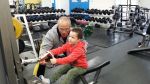
My son and I hanging out in my Family Gym

Just because a big majority of people are sending their kids there does not mean it is the safest or have the lowest risks.

Or how many instances of injuries are sustained by the very young, many of whom are regularly seeing physios and chiros at an age that is unheard of only a few decades ago.

What does this tell us? About the risks these kids are putting themselves under, the full extent will become evident in their later years.

People are only too quick to place gym training as a high risk but this is yet another myth and here is where I believe the problem is:

It is the inability of parents and administrators of sporting activities to initially correctly assess the level of risks. Yes, self-limiting beliefs unfairly bestowed on to children by parents who know no better.

Maybe they just need to adopt a new thinking paradigm that assists in the development of the ability to assess risks of activities and whether or not the risk is acceptable to them.

Time will bust these myths.

Big Truths will always beat Big Lies.

Believe in BETTER.

Make better choices with the life that you have left, with the lives of your children. Time on this planet is all that we really have anyway and one day … that will be taken from all of us.

This is one of those BIG TRUTHS or is this a BIG LIE? Anyone believe this is a MYTH?

All the best.

Until next time,


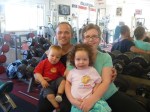
My wife & kids hanging out with me for a few hours in our Family Gym. The gym was my children’s playground.

Learning and absorbing our habits every single day of their initial phase of their lives is what our young Princes do.
Teach them well.


Standard
awareness, basics of training, better choices, body, Body shape, caring, change, change management, choices, Energy, examined life, Fitness, fundamentals, game of life, Goals, gratitude, habit, habits, hope, life, long-term perspective, love, mind, mind-muscle connection, muscle building, muscles, needs, patience, perseverance, perspective, responsibility, self improvement, self love, self-image, self-respect, Strength training, strengths, truth, Vitality, workout, you, your life

How Fit and Healthy are you?

_MG_9931

Definition of Total Fitness

There is no standard definition of physical fitness.

It means different things to different people. Decide on your own definition but be mindful of your activity. Fitness is relative to the activity performed and not all activities require similar fitness.

For example, someone who is playing as a goalkeeper in soccer may not necessarily be fit for hockey and the fitness for running a marathon may not translate to the fitness for playing rugby.

I believe it is more appropriate to promote a broader definition of total fitness that should comprise of the following 5 elements:

  1. Strength and the development of lean body mass (muscle).
  2. Flexibility
  3. Cardiovascular conditioning
  4. Ease of general daily activities
  5. Exercise-FREE factors

Elements 1 to 3 is quite self-explanatory but lets talk about 4 and 5.

With element 4, if you go about your daily activities without an ache or pain in the world, then, you must be doing something right with your life. Stop and spare a thought for the millions of people in the world that are not as lucky as you to just jump out of bed bursting with the vitality of a hundred people.

There is a definite ‘mind-muscle’ connection. Train your muscles to train & exercise your brain and help it release all those necessary life-affirming hormones to flood your body … needed nutrition for the cells and soul. Try it.

Consider starting a Fitness Program tailored to you

Many humans struggle just to get through their daily activities, like getting out of bed, doing their shopping etc without some form of pain or discomfort. Some could not get through their day without resorting to more than a handful of drugs.

Not nice. Not the way they had envisioned of living, I suppose.

With element five, this includes variables that make up your lifestyle such as healthy nutrition (for the body and mind), no drug abuse, adequate rest and recuperation (sleep), adequate exposure to sunshine (but don’t get sun-burned), good posture, healthy and fulfilling relationships and an enjoyable and satisfying employment.

Now, for people who make their living being a sportsperson, being talented is not enough. They each need to ensure they hone their skills specific to their sport to be the best they can be to be totally fit for that activity.

However, if you’re thinking of starting a fitness program. Great for you! Consider the elements I have listed when you think about getting ‘fit’. All these elements should be factored in to your program for self improvement before, I believe, anyone can really be said to be healthy and fit.

I have seen them, so perhaps have you, people that are strong and well-built but physically unfit and cannot even run up a small flight of stairs without difficulty. Just all show and some suffer from a world-wide epidemic, very evident on beaches – mostly men who suffer from what I have termed “ILS” or “imaginary lats – syndrome”.

Yep, you’ve seen them! Then you have people who are extremely fit physically and yet not be healthy (very long-distance runners could arguably fall in this boat).

What is your definition of health, strength and fitness? Does it include your TOTAL self – physical, mental, spiritual, emotional, intellectual, socially?

What is “Fit” to you?

What is ‘Fit” to you?

There is a prevailing mis-perception about what people consider to be ‘fit’ in society as it most probably does not include the 5 elements I have highlighted above. Although it is highly desirable to be physically fit, please bear in mind that there is so much more to total fitness (and health) than just that.

Now, if you’re brave enough to ‘get off the fence’ and help yourself with your physical goals in life and if you’re lucky enough to seek and get help, just do it! (I just love this NIKE slogan). If you feel you want to go about it on your own then consider mapping out a time-frame for your body transformation journey, say a 16-week (4 month) goal with realistic but specific goals.

Obviously, don’t be too ambitious in the early days. Don’t be disappointed if you can’t achieve instantaneous results. Like I have said before, learn patience and persistence.

Take stock of your physical health so far and remember you have had your body since you were born. You have possibly misused it for many, many years.

You have a lot of mending to do, so getting fit won’t happen overnight, but it WILL happen if you TRY.

Be the most UN-Common Man/Woman you can be.
Find the Real YOU and … be YOU

Health, good health is the sum of many parts

Health, good health is the sum of many parts, including how you think, what you eat, read and drink, how you see your body, how you plan your daily activities and how you perform them and how you get on with your internal and external environment.

Like I have said in an earlier blog, you are like a juggler with many balls in the air. If you drop one, that’s fine. Keep going, the others will take up the slack. And then tomorrow, start again with all the balls.

Take a day off occasionally. On those days, sit down for a few minutes and think how you could make your routine more enjoyable.

Notice, I said more enjoyable – NOT EASIER..

Stay focused!

Until next time,


Cheers & Ahoy!

The old Cap’n Viking Pirate Evangelist Muscled Monk … & How fit and healthy are you

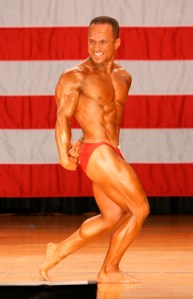
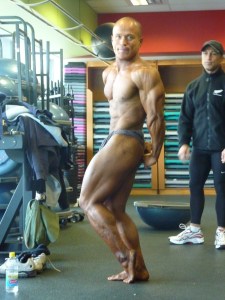
Side triceps pose. Contest: Australian Natural Bodybuilding Titles. Placing: 2nd.

Side triceps pose.
Contest: Australian Natural Bodybuilding Titles.
Placing: 2nd.


Always maintain discipline in all areas of life, at all times, under all conditions … like a great Viking or Pirate of the Seas do.
Become the best Captain of the Seas of Life you can be. …
Cheers & Ahoy!
The old Cap’n Viking Pirate Evangelist Muscled Monk

Standard