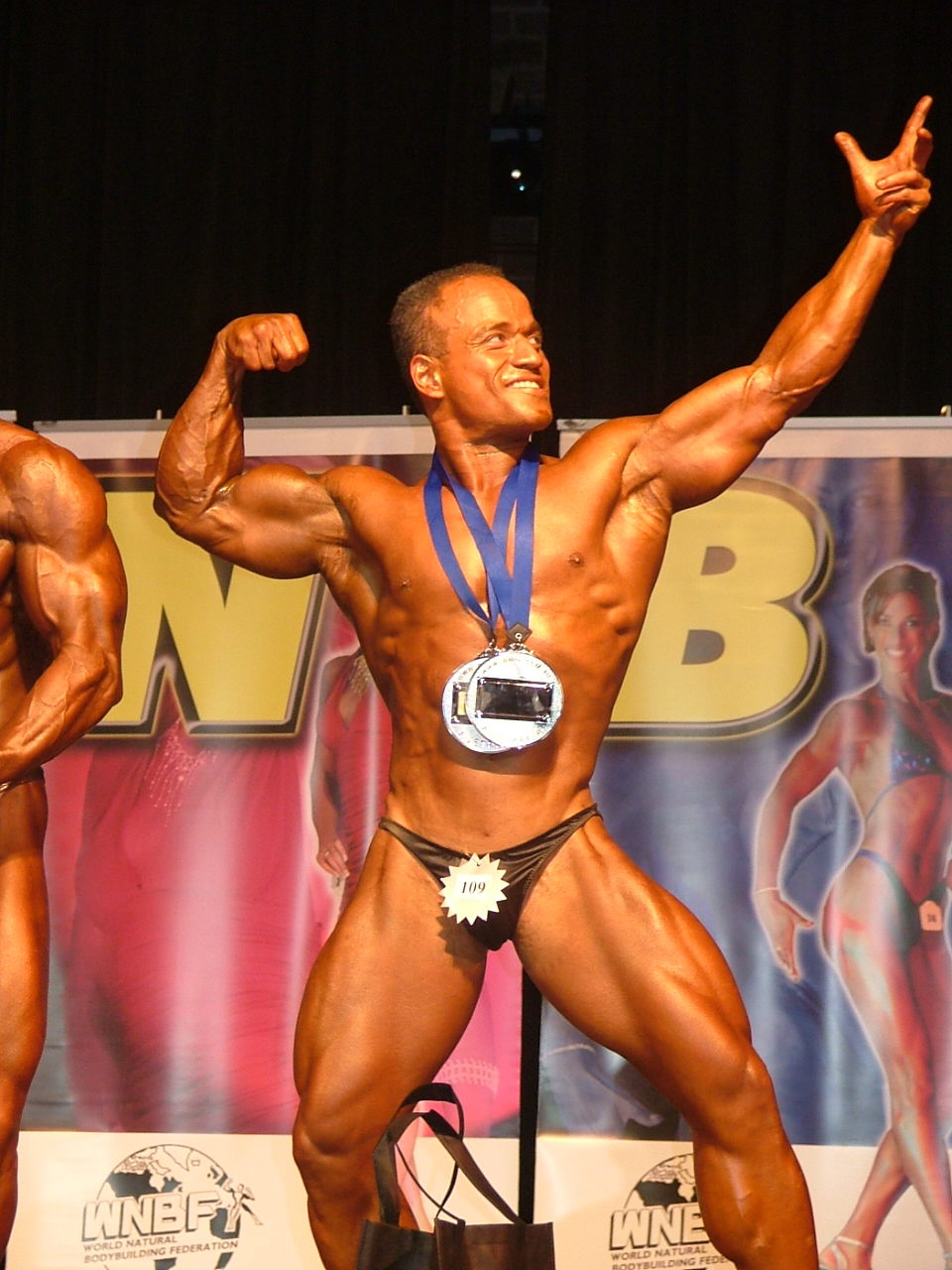
a better life, action, adaptation, art, asking questions, attitude, awareness, balance, basics of training, beauty, Beliefs, better choices, body, Body shape, body weight, caring, change, change management, chaos, choices, courage, diet, eating, examined life, fat, game of life, Goals, goals, good posture, habits, hope, Imagination, life, long-term perspective, love, mind, muscles, needs, opportunity, perseverance, perspective, planning, Strength training, success, symmetry, synergy, workouts, you, your life

Cardio Strategy For Getting Ripped.

Me.
Hi!

Simply Eat Less.

In my experience in the Health & Fitness Industries over the last 3 decades, I have found that the decision to include mega-loads of cardio or hardly any at all swings through the bodybuilding culture like the pendulum of a clock.

“Bodybuilding “ here includes anyone (from the skinny teen all the way to the grannies in the 90s) … who use weights of any kind to build muscles/strength and/or attempt to change their body shape.

There’s a new fad with a new name every few years or so, backed up by some new (limited) study and an awareness marketing campaign led by some famous ‘celebrity’.

Many who favour cardio claim that it allows them to eat more. That is good, right? Eating more is anabolic, isn’t it?

On the other end of the cardio spectrum, supporters of LESS CARDIO insist cardio is the most catabolic thing that can be done. They claim that it has to be avoided.

Solution they come up with: simply eat less.

So, should you do more or less cardio?

I won’t pretend to try to solve this dilemma but I will give you some facts, as I see it and have experienced it. Hopefully, it takes you closer to the doorstep of your ultimate condition.
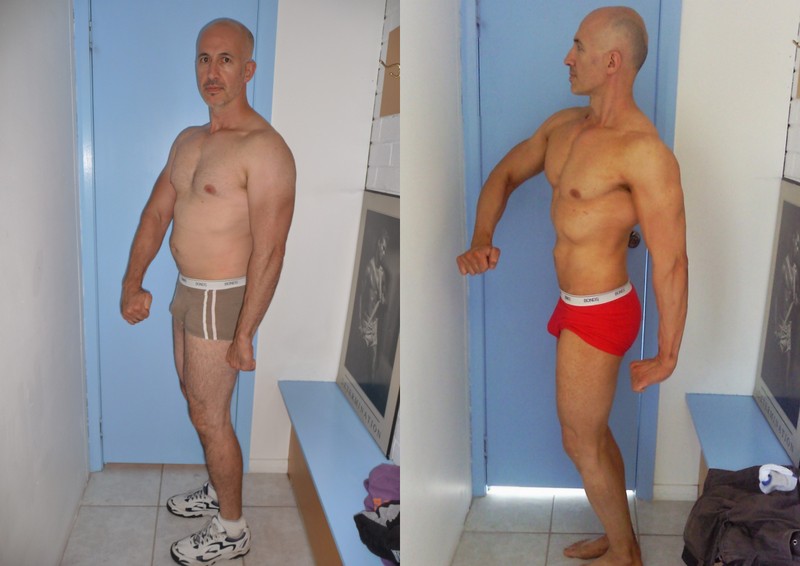
It’s your BODY SHAPE, not BODY WEIGHT that MATTERS most.

The 80:20 Principle.

First, let’s clarify what is the actual goal in terms of physiology? 

Based on one of Nature’s Principle (the 80:20 principle), the vast majority of “fat” in our body (over 80%) is collected in one form and stored in body fat cells.

The process that the body uses to consume this energy and effectively get rid of it – is called lipolysis.

I’m going to try to detail the mechanism of this process with exercise (avoiding diet for now).

In my experience of helping hundreds of individuals over the years is that I find that The difficult part is when : we have to apply these “truths” to the many different circumstances and body types that we find in the sport of Physique Artistry/Bodybuilding.
Become better at “being comfortable at being uncomfortable “ to keep your pendulum ticking … & your life, living

Everything is hormonal-driven.

Activity-related hormones epinephrine and norepinephrine speed up lipolysis greatly.

When we start working out, we firstly use the readily available energy in our blood, called GLYCOGEN. The body starts shuttling out these glycerol and fatty acids (fat) from our body fat cells. 

research shows that the greatest increase in fat usage starts immediately upon exercise, hits a peak level within 5 minutes, sharply decreases, by the 15-minute mark starts to plateau, and within 30 minutes is back almost to a rate matching a control group. 

So, what do we do with the common knowledge that carbohydrates (blood sugar/glucose) are used exclusively for the first 15-20 minutes of cardio? 

As most of you are aware, blood sugar is the dominant source of energy used by the cells of our body at the start of exercise. As you do cardio, the body digs into longer-term energy stores, the liver (through the action of the hormone glucagon) starts pumping out stored glycogen and as described, body fat cells start releasing glycerol and fatty acids.

The question we then ask ourselves is – does the liver run out of glycogen? When it does, what happens then?

People ask – “why?” … I /My curiosity continually askS “why not?” Seek possibilities… always

As long as Body Fat is available …

It is quite obvious that When we are exercising, we are moving the body towards an Energy Deficit.

My understanding is that the body & in particular, The liver, tries to contribute to the energy deficit.

How does it do this?

it does so by converting amino acids into glucose.  I’ve learned that the liver has a reservoir of aminos available. Despite this, this process is STILL a catabolic phase. And what is “catabolic?”

It simply means “muscle wasting “ or muscle deterioration.

Interestingly, though, even during the harshest, longest bouts of exercise, studies show that only 3 to 6% of energy is consumed from amino acid use. 

As long as fat is available, the body spares protein as if it were the most precious commodity it has.  Nice to know the brain agrees with us on that one.  We need to dig a little deeper to get a better understanding of how the body tends to operate.

There are many variables we need to bring into the equation before we even address things like duration, frequency, and intensity.

Even a small percentage of amino acid use can add up if it’s a repetitive occurrence. I also mentioned “as long as body fat is available”…

Same weight. Different body composition. The right has higher Muscle: Fat Ratio. L: 15% body fat. R: 6-% body fat.

Body Type.

Many individuals don’t get to that stage (under 10% body fat) to worry about not having sufficient body fat available to be used as Energy, during exercise.

The variable of BODY TYPE is an important consideration when deciding HOW MUCH CARDIO an individual should do. There are 3 main body types – ectomorph, mesomorph and the endomorph.

What is your body type?

In my experience, An Ectomorph, has to have a healthy fear of “too much” cardio since they will be at the top end of the population in terms of using amino acids for energy. The more, the better, in their case.

In the middle of the spectrum, those that lose moderately slowly (like me) need to understand that muscle preservation is their greatest asset. We need to see cardio as a very necessary part of their daily habits and any kind of preparation for competition.  

It has been and still is, a KEY daily habit of mine.

On the other end of the spectrum, you have the Endomorphs. For these individuals, more, rather than less cardio is the way to go. They usually have a lower metabolic rate to begin with and tend to carry a very high level of fat deposits.

The more cardio, the better.

The Rate of Lipolysis.

Here is where armchair interpreters of research often start showing that it takes more than throwing some big words around to master the subject.

KEY FACT: The rate of lipolysis is virtually unchanged whether we’re at just 25% of our VO2 max or 85%.

That means that whether you’re walking on a treadmill or slamming out 30km/hour sprints, your body is releasing the same amount of body fat to be used.

Before you say, “Aha!! I knew that slower, longer cardio sessions were the right thing to do,” don’t!

You first have to differentiate between just releasing fat to be used and actually using it. 

If you maintain a slow or high pace, a percentage of the energy will come from your fat cells . That’s a given.

In the case of the former, even though the body is releasing fat to be used, when it’s not used, it simply resynthesizes the glycerols/fatty acids and re-stored as body fat. 

So, we then ask other key questions like:

1. Due to a slower rate of usage, should one just perform a longer duration and ultimately use the same amount of calories as someone doing a shorter but harder session?

2. Which will use more body fat and which will be less catabolic?

You should Keep in mind that the body has a vested interest in using these fatty acids for energy.

It doesn’t take a rocket scientist to deduce that Glucose and glycogen (the energy currency of our body & brain 🧠), aren’t in endless supply.

It’s obvious that when activity levels increase, the body needs to turn not only to its larger material source of energy, but it wants to be efficient at it.  Remember that – it wants to be EFFICIENT AT IT.

As the RATE OF LIPOLYIS is increased, so is the blood flow to the exercising muscles, and so are the chemical processes that convert the fatty acids into usable energy. 

TWIST IN THE ROAD.

Here is yet another twist in the road. 

As intensity increases, these glycerols are used at a higher rate – a good thing. But, when exercise intensity reaches a level where blood flow is necessarily shunted more sharply to the working muscle tissue, blood flow to the available fat stores is restricted tremendously, decreasing the rate of fat that is made available to be used as energy.

That is why I tell all my former students that the OPTIMAL TIME to do cardio & burn more fat is first thing in the morning, upon waking and … on an empty stomach.

Like I said earlier , If we perform light cardio we release just as much body fat as high-intensity work. What is the risk of losing muscle here?

Answer: the risk of losing muscle is low.

However, but then due to a slower rate of fat usage, we simply re-store the released body fat.

So, you may be thinking – “why don’t We just do longer sessions of low-intensity cardio?”

Yes, you could but it would not be the most effective use of your time. And why?

Well, research shows after 30 minutes, fat release actually decreases – not increases as conventionally taught. 

Trying to keep every variable straight is like trying to catch a greased pig.  It’s like the squirrel in the animated movie Ice Age; as soon as you stick every available finger and toe in the leaking wall of ice, another confusing point of physiology springs out of a new crack. 

No wonder there isn’t a consensus on the subject.

As I mentioned in the beginning of the article, you would be making a mistake if you take this article as covering every facet of the subject – think of this as just an outline and the book isn’t finished.

Seeing your progress, any progress, however small, is a motivating factor.

ACTION PLAN.

Read on for an action plan…

The ease of your body’s ability to burn body fat will affect how much cardio you do. This is depended on your body type & genetics.

Being that all of cardio is catabolic, you want to do the least you have to in order to be shredded. 

For some that may mean twice a week and for others that may mean twice a day. 

Consider two glaring facts:

One: Your body immediately starts releasing body fat with exercise and continues for 30 minutes until the law of diminishing returns virtually eliminates any further benefit. 

If we are going at too slow of a pace, the released fat gets re-stored and if we get too high in our intensity, we shunt blood flow away from fat cells.  As such, I believe, there are two types of cardio that we can benefit from and still meet our goal of sparing as much muscle as possible. 

The first is thirty-minute sessions at a good pace – heart rate sustained at 130-150 beats per minute for most people.  Remember, even at just 25% of our VO2 max we’re going to be releasing all the body fat that we can, but we need a pace that will actually use what is released, but not so much intensity that the body goes into a fight-or-flight mode channelling blood to the muscle tissue systemically and away from the adipose cells and organs. 

The best natural bodybuilding athletes/champions know and understand how to do this better than almost everyone. Their “Double-edged sword” of keeping /maximising muscles and maximally losing fat is the challenge /opportunity.

I also believe the value of super-high-intensity cardio is tremendous but you have to weigh the catabolic effects and the fact that it won’t take long to be counterproductive and decrease the amount of fat actually being released (due to the changing blood flow patterns). 

I would recommend using high-intensity sessions 1 to 3 times per week for 15 to 20 minutes to create longer-term fat usage through the increased metabolic effects. 

Ectomorphs may have plenty by doing just 10-minute high-intensity sessions, but even endomorphs shouldn’t do more than 2 to 3. The amount of actual leg muscle recovery necessary should be a limiting factor – you’ll need to recover almost like a leg workout.

A major turning point in Alan’s life was coming to me for help. I helped him, help himself … build his bridge from where he was to … where he wanted to be. Saved his job … saved his marriage … saved his life.

Base-line

The “baseline” 30-minute sessions could be done daily or even twice a day for those who lose weight slowly or have more lower body stores to contend with. 

That doesn’t mean that longer, slower cardio is worthless, you just get a fraction of the fat loss after the first 30 minutes. 

Breaking up an hour of cardio into two sessions can net more fat loss if the pace is high enough and consistent. This is what I do. I try to do 30 minutes walk in the morning on a treadmill and another in the evening if I have the time.

The great thing about human performance research, however, is that we’re still very much in a pioneering phase. 

Studies conducted with different variables keep adding to our understanding and more specific information is sure to be discovered. 

For now, this is my story and I’m sticking to it.

Keep safe. Keep punching,

Until next time,

P.

Standard
adaptation, awareness, body, Body shape, body weight

Bulking up vs building up.

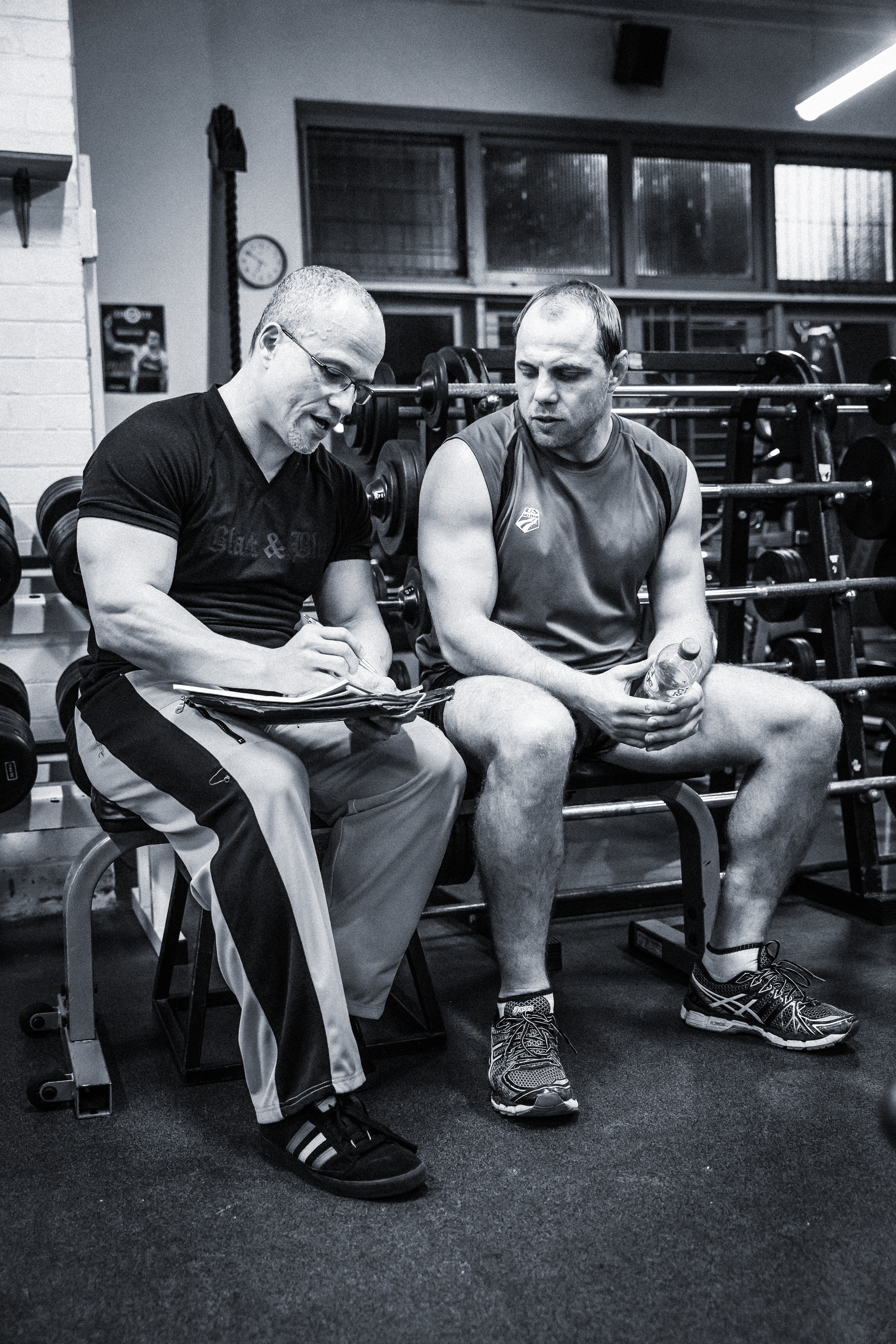
Using my framework to help individuals of all ages, shapes and sizes to help themselves become THE BEST they IMAGINE THEMSELVES TO BE. Photo: an A+ pupil Phil Waugh - retired Legend of Rugby, Ex-Australian Wallaby & Waratah Captain. Knowing is potential power. Doing is Real Power. Knowing the right time to apply both is essential to goal achievement.

Using my framework to help individuals of all ages, shapes and sizes to help themselves become THE BEST they IMAGINE THEMSELVES TO BE.
Photo: an A+ pupil Phil Waugh – retired Legend of Rugby, Ex-Australian Wallaby & Waratah Captain.
Knowing is potential power. Doing is Real Power. Knowing the right time to apply both is essential to goal achievement.

I have heard many, many reasons of wanting to lift weights from people in the gym over the last 23 years. Many myths are still being propagated too.

There is one such myth that still exists regarding the approach to take to building muscle and that is – “bulking up”.

A lot of men think that “bulking up’ equates to putting on muscle. They think it is the best or only way of building up their muscles. They think that just because they have put on 5kg in a month means that they have built 5kg of muscles.

I have news for you: It does not work that way!

I see it all the time, young men (and dare I say women, too) believing the myth that if they go through a ‘bulking up’ phase, they would see extra muscles when they trimmed down.

In my 23 years of weight training I have put on close to 15kg of lean body mass – not weight, muscle! That’s just over half kilo of lean muscle per year. Not much when you view it this way aye?

Yeah, but taking the ‘tortoise approach’ to building muscle is not the key message. Building up is important, yes, holding on to the hard-earned muscle is more important. Remember this: build it up, then do everything in your power to hang on to those precious muscles.

You see, in all these years, I have not gone out and purposely aimed to ‘bulk up’. I have always seen myself as a work-in-progress and have always been (and still am) in the ‘building up’ stage even after all these years. There are just different phases of ‘building up’.

Muscle does not convert in to fat and fat does not convert in to muscle. Period!

You should not try to gain weight just for the sake of it in an effort to look bigger or ‘bulk up’. Building quality lean body mass (muscle) takes time and patience and relies heavily on genetic pre-dispositions.

With the goal of bulking up, it would highly likely be that a high percentage of your bulk weight would come from unwanted fat. Yes, you will put on bulk and weight but you will look ‘smooth’ and fat deposits will settle on areas of your body that you may not be happy about.

When you have a mind-set of ‘building up’ your muscle density, you encourage your body to become more metabolically efficient because every hard-earned muscle ounce you build becomes a ‘fat-burning dynamo’! Your engine room or metabolism (the rate at which your body burns energy) gets bigger and bigger. I could liken it to a small car engine (say a 1.8L) compared to an 8.0L or a V8.

Fully focused! A true warrior & champion. Focusing on making every repetition of every set of every exercise as ideal as possible. Practise does not make perfect - Perfect practise makes perfect! Photo: Retired Champion Ex-Australian Wallaby & Waratahs Captain and player in action under my watchful eyes.

Fully focused!
A true warrior & champion.
Focusing on making every repetition of every set of every exercise as ideal as possible.
Practise does not make perfect – Perfect practise makes perfect!
Photo: Retired Champion Ex-Australian Wallaby & Waratahs Captain and player in action under my watchful eyes.

More muscle equals more engine power (even at rest)!

Huge difference in energy consumption and power output. Huge difference in body composition and ultimately body shape. The mirror would reflect this.

You feel better, you look better and you wear your clothes better. You make the clothes ‘look good’!

Working out with the goal of building up a physique is far safer and a smarter way to go about your weight training than simply aiming to bulk up just to trim down later. You don’t have to work hard to lose what you put on in the first place.

So, focus on building up rather than bulking up.

Keep your training continuous and simple. Aim to put on good, quality, lean body mass (muscle). It might take longer but it is better. So what does it take? It takes vision (of a better you), a workable plan and the work ethic (discipline, consistency and persistence) to execute, with patience.

We all know that life is not a dress-rehearsal. Do you live every day like it was your last? Ask yourself: Have you got what it takes?

To build muscle, remember to leave your ego at the door of the gym and remind yourself that it is body-shape, not body-weight that matters.

Compare, say, a 75kg person with 15% body-fat than a 75kg person with 35% body-fat. They both weigh the same, but they will have totally different body-shapes and the latter person would more than likely have higher health risks.

This is why only focusing on your body-weight and not your body-shape (body composition) does not give you the full picture. Always aim to increase your muscle : fat ratio.

So, aim for building up rather than bulking up and help yourself manage one of your physical health and life risks.

Build up that engine room. Build up that ‘revving power’!

Then ….

Drive safely through the roads you decide to take as you journey through your life.

All the best!

Until next time,

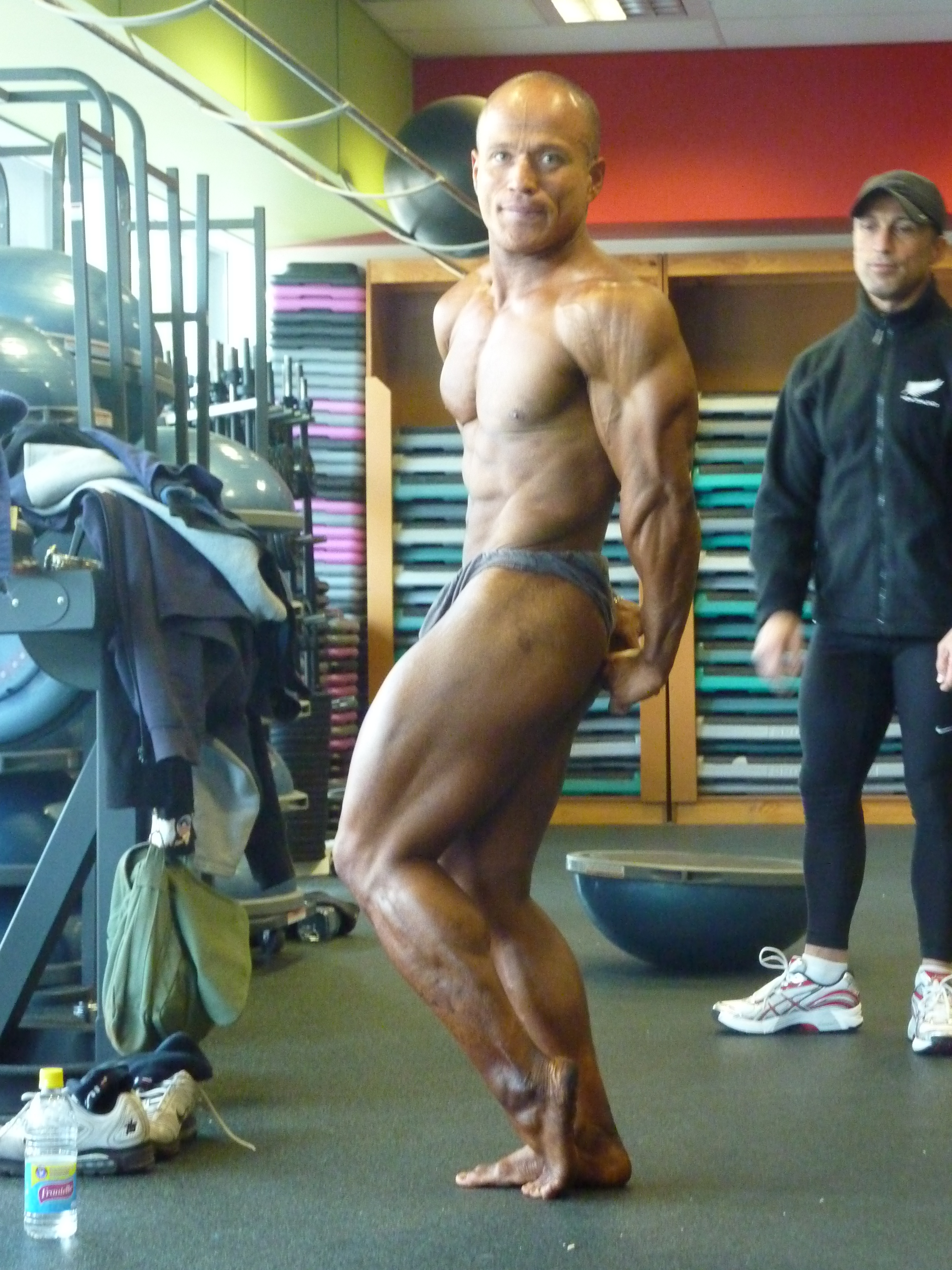
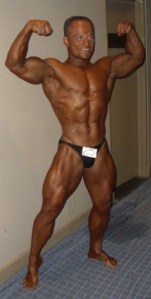
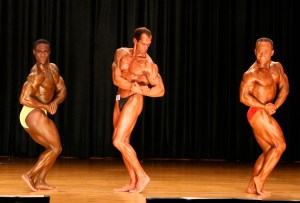
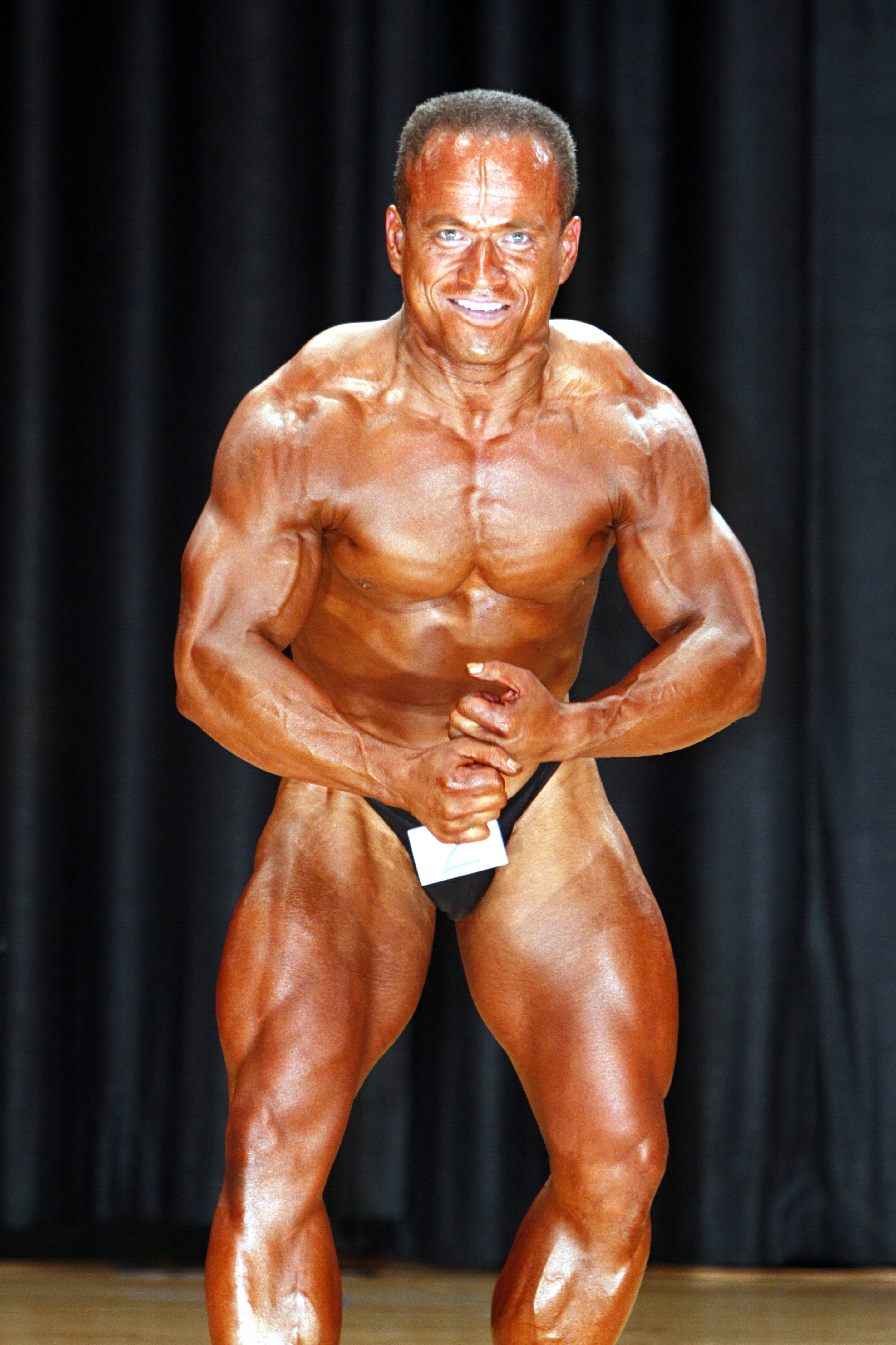
Side triceps pose. Contest: Australian Natural Bodybuilding Titles. Placing: 2nd.

Side triceps pose.
Contest: Australian Natural Bodybuilding Titles.
Placing: 2nd.

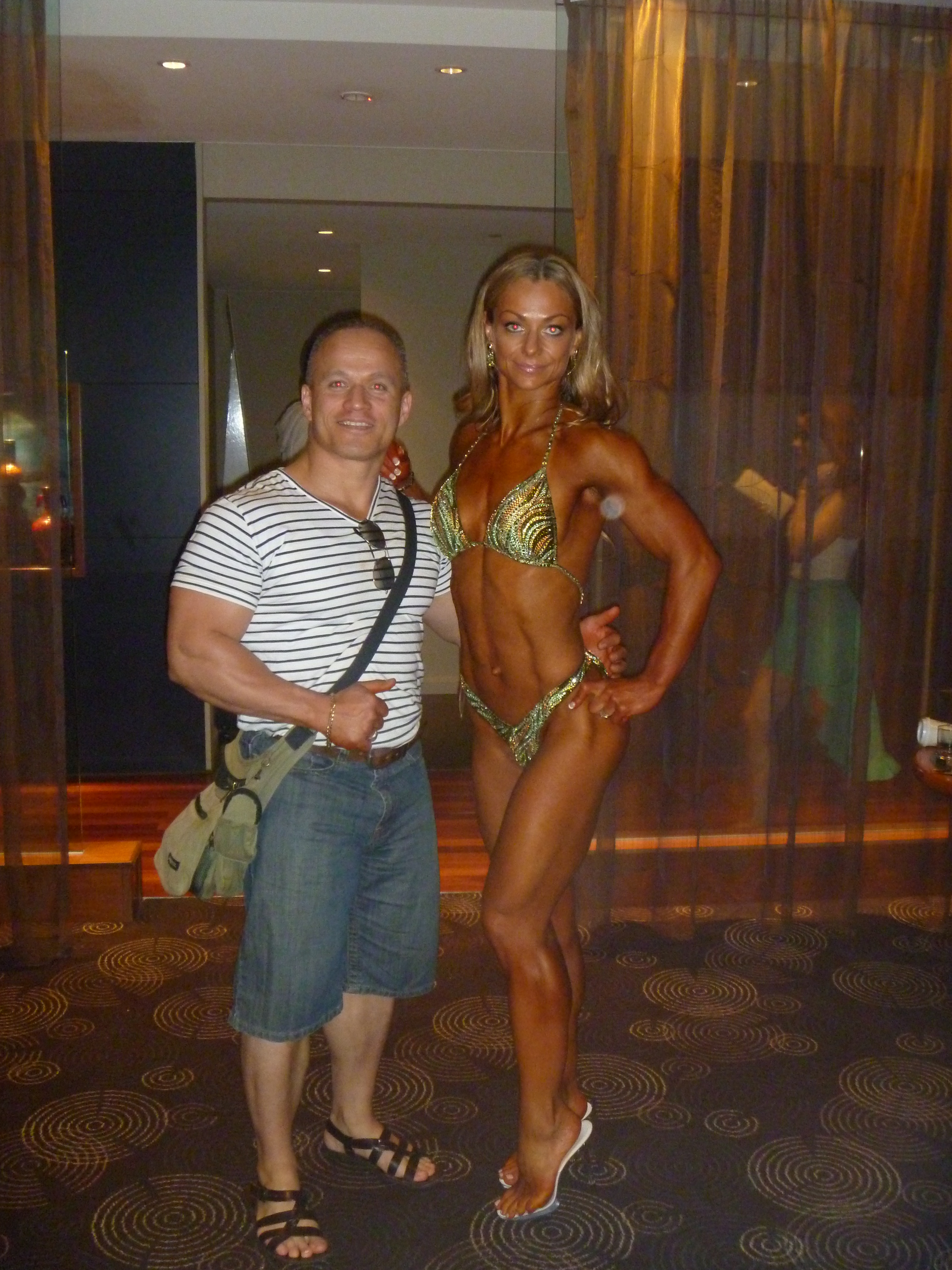
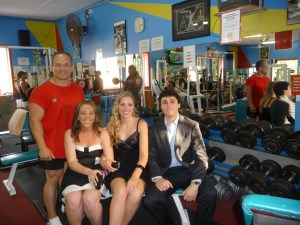
With another woman, backstage.
A fan.

All B&W photos by: Robert Walsh of Robert Walsh Photography. Visit: “www.robertwalsh.com.au” and see how this great artist may be able to help you. Vv.

Standard
awareness, Body shape, body weight, change, choices, diet, eating, Energy, habits, perspective

7.5 Diet Tips that may help ease your bloating.

Was there ever a time where you’ve grudgingly complained? –

“what’s the point with all the exercising?!” when the minute you try to slip into a tight skirt or your favourite pair of jeans, your stomach blows up like an inflated balloon.

I find that it has been a common point of disappointment with quite a few people I have helped over the years. And it can be quite de-motivating for those who put in all the hard work in the gym and still suffer from excessive bloating.

So, if you’re one of these people who suffer from this condition, maybe your diet (for the body) needs a little assistance.

Here are a few tips that may help:

1. Eat small, well-compositioned meals

  • Eat them more frequently – ideally, ‘split’ over 5 or 6 meals throughout each day.

2. Take your time –

  • Try eating slowly or slower.
  •  Observe the speed at which you consume your food. Do you inhale it or do you take your time and try chewing it thoroughly before swallowing? Don’t rush the mush.

3. Reduce salt intake –

  •  The sodium in salt holds water in your body so watch your salt intake. For you women out there, ‘that time of the month’ may play a part in that bloated feeling.
  • So, try reading the labels of the foods you eat so you can have a miss on the high sodium-content foods.

4. Say no to refined (very processed) foods –

  • Choose complex carbohydrates (like sweet potato, brown rice, whole-grain pasta or breads).
  • Highly refined products can leave you feeling quite bloated (especially white, wheat-based products).

5. An aversion to milk and milk products –

  • Your bloating can be significantly influenced by lactose. From the lactose in milk and milk products.
  • Try replacing all dairy items with rice milk or soy etc.

6. Limit your fizzy drink consumption –

  • Limit it to non-calorie/zero sugar varieties.

7.5 Eat some yoghurt –

  • Eating some yoghurt with active acidophilous culture could deflate you down to your normal size.

I hope these tips help you reduce your bloating or even reverse it.

Now, don’t stop going to the gym and exercising just because your bloating doesn’t seem to get any better no matter how hard you work-out. Keep up your training with consistency and persistence. Keep up your investment in your health and fitness.

Your health (physical and mental) is literally your wealth. It is only when it is taken away from you, that you realize the value of it so put aside some time towards this every single day.

And don’t be too worried about the bloated stomach. There are many cultures in the world that find a rounded belly more sexier and fulfilling than a flat stomach. The middle-East and Pacific Island countries love a well-rounded tummy.

Keep up your daily crunches and other tummy exercises but you don’t need to do a thousand sit-ups. No,these exercises don’t actually get rid of fat. They only tighten and strengthen the muscles (abdominal wall) on top of your stomach. Its the extent of body-fat you have that determines whether or not you can ‘see’ your abdominals. For example, you will begin to see your abs at or under 9% of body-fat, so excessive amounts of abdominal work will not reveal your abs until you work on losing fat.

On a more serious note, although being overfat is an important health risk, I believe where you carry your fat is even more important. Don’t be too concerned with how much you weigh! Be concerned with what your body-shape is: is it an ‘apple shape’ (with most of your weight around your tummy) or a ‘pear shape'(weight mostly around your hips and thighs)?

Now don’t confuse feeling ‘bloated’ to carrying excess visceral fat around the mid-section (typical area of deposit for middle-aged men). The greater the discrepancy between your waist and your hips (your waist:Hip ratio), the greater your health and life risk. These risks stem from insulin-related metabolic problems like high blood pressure, elevated cholesterol, heart disease and diabetes. NOTE: as a guide, men should strive to have a waist-to-hip ratio less than or equal to 1 and women should aim for 0.8 or less.

Recognize that storing fat in the tummy area does not cause your health risk to rise – it is simply another symptom of the underlying metabolic disorder: insulin resistance. So, it is in your best interest to you and your life to do all that you can to manage the accumulation of fat in this area so that your risk is lowered to an acceptable level. The gym is a good place to start to complement a good diet and stretching program.

If all else fails, try practising holding it in. Yep, There are some products out there (some undies for you ladies) that may assist with tummy bulges. Men, you could probably try wearing a weight-training belt around your waist.

See how this goes.

All the best in your journey towards a tighter-tummy. I will leave you with one summary: manage your tummy, manage your life risks.


Until next time,

Paul V2 (1)

Standard
adaptation, awareness, balance, better choices, Body shape, body weight, choices, diet, eating, game of life, habits, happiness, Imagination, life, muscles, needs, responsibility, self discipline, self-respect, you, your life

Eating Right actually takes less time than you think. Tip # 6: Eat more snacks!

Educating a top national sprinter of the importance of proper nutrition for recovery & growth for optimal performance

Eating more snacks

How good is that?!

Eating more snacks, that is. It makes us all feel good just reading that tip. Gives you some mental peace of mind, a release valve when you’re on a ‘slimming diet’ program or just contemplating the thought of going months on end saying ‘no’ to all the good food you’re used to eating.

It can be quite difficult for many to create what I refer to as your own self-imposed ‘purity bubble’ when everyone around you is consuming everything. In abundance. Yes, indeed, it can be very difficult.

Your saving grace is your imagination.

The more vivid your imagination is of the image you visualize yourself to be, the less difficult it is to maintain that purity bubble. Your desire and need for this has to be greater than your need for instant gratification from temptation in the short-term. You goal (image) could be to ….

… To look and feel better about yourself at Christmas, say.

My tip of eating more snacks will assist in your journey towards this goal. Phew, finally, a nutritional tip that agrees with the majority of us! Finally, a tip that we all want to do more of and yes, the more snacks you consume, the better.

But not too fast now … there are conditions though.

There is a definite ‘mind-muscle’ connection. Train your muscles to train & exercise your brain and help it release all those necessary life-affirming hormones to flood your body … needed nutrition for the cells and soul. Try it.

there are conditions 

This tip should take you less than 4 minutes flat!

Add that to the running total of my previous Top 5 Tips which was thirteen minutes.

Sum of estimated time taken to perform the Top 6 Tips = 17 minutes. A whopping 17 minutes (or 1020 seconds) out of your busy day with the goal of eating right.

Just to remind you that these Top Ten Tips to eating right also has another goal and that is to demonstrate to you that it should take you less than 30 minutes (1800 seconds) out of your day to eat right. And why is this important to you and worth your body, mind and spirit’s time? Because it is important to provide the best ‘mix’ of raw materials to the being, the machine, the energy-ball that is – YOU.

I am not going to go in to why snacking is important. I have elaborated on this in a previous blog “snacking. The more, the better”.

What I am going to do is give you a list of some good snacks you should carry with you every day before you leave the house for work, play or socialize. Whether you’re a vegetarian or an omnivore, we all still get most of our protein from the three main meals – breakfast, lunch and dinner. And, before you get the wrong idea, by snack I don’t mean cupcakes and fries!

Nope, I refer to a well-composed small meal on the run.

Your life is a continous journey of setting, failing and succeeding in goals … until you …
kick the bucket!
Keep moving forward, I say!

The choice of what you eat is always yours 

Whilst food is analysed to shreds keep this one fact in mind for simplicity’s sake: once any form of carbohydrate is eaten (whether its fast burning or slow burning), your body converts all carbohydrates to sugar. So, from that standpoint all sources of carbs are equivalent. However, what is different from the types of snacks I will be listing below and junk choices are essential input the body needs.

Essentials such as fiber, the vitamins and minerals and some cancer-fighting phyto-chemicals found in vegetables and fruits.

At the end of the day, the choice of what you eat is always yours, but so are the level of risks attached to those choices and the consequences likely to occur to your health. Your life.

Choose wisely.

Carbohydrate (Carb) comparisons examples:

1 marshmallow = 1 medium raw carrot = 7 cups mushrooms = 420g (3 ½ cups) of broccoli = ½ cup melon = ½ orange = ¼ very small potato = 1/7 Mars Bar = 1/3 medium banana = 7 jelly beans = 14 cups fresh lettuce = 3 french fries!

Interesting calorie to volume ratios relating to just a small sample comparison, isn’t it?

The snacks below provide approximately 5g or less. If you’re hitting the weights in the gym, add a protein shake (with low carbs or no carbs) to these to ensure that you’re getting adequate levels of protein for muscle repair and growth. A serving should give you between 20g and 30g additional protein.

½ medium avocado = 1 medium carrot = 1 cup frozen spinach = 1 medium tomato = ½ cup diced eggplant = ¼ cup blueberries = ½ cup strawberries = ½ cup snap beans.

Other snack options:

Sandwich (light bread, 30g meat) P:C = 7g:7g

Apple/cheddar slices (1/4 apple/30g cheese) P:C = 7g:1g

Cottage cheese  (1/4 cup) P:C = 7g:2g

Hard-boiled egg (1 large) P:C = 6g: 0.6g

Lean meat slices (30g) P:C = 7g: 0.1g

Walnuts (30g) P:C = 4g: 5g

Macadamia (30g) P:C = 3g: 4g

An exhaustive list of ideal snacks? No. Rightly so.

Homework for you: try to become more aware of what you’re consuming. Start measuring the food you eat. We measure everything else – how much money we spend; how much time you spend at work; what size coffee you want; buying a new pair of shoes or trousers.

Measuring is part of our every-day life. We’re constantly measuring. Why not start measuring your food intake. Buy yourself a food scale and measure your foods.  Make it habit. To make it habit, repeat to remember and remember to repeat. Like a good pair of shoes, make your food ‘mix’ fit right. For you – the YOU, you want to be (in a few months perhaps).

There you have it, my 6th Tip of my series of Top Ten Tips to a better you, this summer.

If by some chance, a part of you, a part of your goal is to lose excess body fat – and for most people who suffer from insulin resistance, it is – this tip, along with the previous five and the next four will be good for you. It will offer you one of  the easiest and most effective system available (through the power of habit) for doing that quickly, safely and sustainably.

Two common questions I have heard from the many hundreds of people I have helped over the last two decades is:

  1. How quick can I lose weight and how long will it take to reach my goal?
  2. How much food can I eat each day?

Before you seek answers to this, my tip to you is try adopting my Top Ten Tips in to your daily life. Work it in to your lifestyle. The metabolic adaptations that occurs in your body as a result of falling insulin and the increased sensitivity achieved triggers off many good things.

Your improved sensitivity to insulin will in turn increase the rate at which you burn calorie (even at rest) and you will find the new you, sooner than you think.

Act.

Adapt.

…. And give you a little bit more peace of mind.

Good luck in your choices.

Until next time,

Do the Right Thing, ALWAYS.


Standard
adaptation, Body shape, body weight, habits

Eating Right actually takes less time than you think: Tip # 5.

I like this hat.

I like this hat.

Tip # 5: Make one equal half.

There are many ways to lose weight.

Many.

You could do it the healthy way or you could do it the unhealthy way. Your definition of ‘healthy’ may differ from mine, as I have found over the many years I have assessed clients’ diets.

A big part of successful body re-engineering or transformation is ensuring that you are on a ‘healthy’ diet which is aligned with your end goal in mind. Typically, before I am even given a chance to assess peoples’ diets, they usually say something along the lines of “… oh Paul, you know, I eat healthy … “ or “ … no problems with my diet. I eat healthy all the time.”

Your life. Your choice. I understand that. I accept that I cannot help everybody, but I will do my very best to reach out to the many readers (like you) around the world who take the time to read my blogs. Hopefully, each one you read adds some value to your life.

A wise man told me this over five years ago now, when he saw that I was upset for a client who sabotaged their own progress by giving in to temptation.

He said “ Paul, don’t be upset my son. You cannot save everyone. Especially those who don’t want to be saved.”

I have never forgotten that. You can only do so much.

Something that we all need to remember as we serve those around us, and particularly if you’re lucky enough to be doing what you love to do. A big bonus indeed. But, we must continue to love to serve those who love what we do, to the best we can perform them, without prejudice.

Until proven wrong.

That is just an integral part of life’s journeys. Each and every one of us’s – JOURNEY: CHOICES.

Most weight loss diet programs work. Yes. And how do we know this? Well, a pictorial representation of “ before” and “after” is normally displayed as proof of success, with a bucket load of testimonials. Wow!

Healthy? Some are. Many, are not.

There are many unhealthy ways of losing weight, too. One should not just focus on the scale and make decisions on the change of scale weight when undergoing body transformation programs. It could not only be mis-leading but also unhealthy, especially if you’re not including resistance training or weight training a pivotal part of your journey.

I’ll give you an example: I lost 5kg in absolute terms when I went on the ‘drip’ for four days when I was admitted to hospital in 2007 for a complication. Was it a healthy way to lose weight? Nope!

The worst part of losing weight in an unhealthy fashion is how it made you feel. I felt this feeling when I was in hospital for almost a week. You lose that sense of vitality. You feel weak. You don’t feel like your usual self. Essentially, you feel like cr#p!

Yes, I know this is an extreme and abnormal circumstance but the point I am trying to make is that it is not a ‘healthy way’ to lose weight. Just like so many fad diets that have come and gone over the years. Losing weight just for the sake of losing weight should not be the goal as it is body-shape (your muscle to fat ratio) and your ‘waist-to-hip ratio’, not body weight, that matters.

The scale does not know that. The scale still tries to make you feel better by indicating your loss of weight. The questions you’ve got to ask yourself is:

  1. Is this good for me? What is the risk/benefit ratio?
  2. Is this sustainable? (Can I work it in to my life-style?)
  3. What is the opportunity cost? Short-term and long-term?

Now, I want to get to the gist of this latest tip – Top Five of my Top Ten Tips to eating right and proving to you that it actually takes less time than you think.

Every day.

So, you’ve got this far with your body transformation. You’re either implementing my last four tips (if you’re serious about learning) or you’re still eating the way you’re eating. And wishing the excess blubber (weight) you’re carrying around your waist and butt and thighs and arms (those ‘tuck-shop’ arms ladies) would just melt away.

Melt away before summer. Before you hit the beach. Melt away so that you can fit back in to those summer shorts you wore three years ago. When you were a little smaller, perhaps.

Well, you cannot do that by sitting around and wish the excess will just ‘melt away’.

Wishful thinking!

Can you spare 2 minutes?

Well, if you’re still eating the same way and find it difficult to adopt a more ‘green’ approach. Fine. This tip requires you to just halve all meals you are currently eating. Specifically – cutting your carbohydrates in half. Yep, that’s right, half!

What are some typical sources of carbohydrates eating for breakfast, lunch and dinner and snacks, I hear some say? Examples include – bread, pasta, rice, biscuits, wraps, potatoes. Put simply, if it white-powder based, halve your consumption of it.

Easy, right? Wrong.

It will be a challenge. It won’t be easy. Why? Because habits, especially, bad habits, are very difficult to break. We now know that habits cannot be eradicated – it must instead be replaced by another (good) habit. The hard part with this intervention is the first 5 to 7 days. Allowing your body (and mind) to adjust and adapt.

Your stomach ( a smooth muscles, which also contracts and extends like other muscles) needs. You need to be strong. Its one thing having the discipline for the physical. Its another having the mental discipline to stay focused. Your stomach will shrink and you will eat less. Over time.

Give it time. Have patience.

I have found that people generally work very hard at maintaining their bad habits or habits that are less than ideal. If they only took that same focus and work and apply to the adoption of good habits that are aligned with their life goals. Maybe, just maybe, the successful attainment of their goals may be more forthcoming. It is difficult, I know – replacing habits and then sticking to it.

One of the major reasons that replacing habits does not ‘stick’ is that it is NOT ENOUGH just to REPLACE A HABIT. Nope, not enough. This is where belief comes in. You must believe change is possible. Real, sustainable change. That is one of the critical components of my unique body re-engineering programs. The power of belief. No belief, no nothing. In the photo below is an example of the successful habitual change in the successful achievement of a pupil’s physical transformation goals using the principles in my programs.

Change CAN HAPPEN. I know that because I have seen many examples over the years. Alcoholics can stop drinking. Smokers can quit puffing. You can stop ‘snacking’ at work with less than ideal snacks. Perennial losers can become champions (change can be applied to companies, clubs – like the recent NRL champions – South Sydney Rabittohs, winning a premiership after 43 years).

So, if you’re eating 4 pieces of bread for breakfast, reduce it to two. Add more of tip # 3 (eat more greens) to fill you up a little more.

There you go, a running total of 13 minutes (11 minutes from past 4 tips and add this two minute tip) to adopt these Top Ten Tips so far in your day. Can you spare thirteen minutes of your day to eating right. Do you have the time?

You bet you do!

Help yourself. First. This allows you to become more useful and a better servant to others.

Amen.

Good luck,

Until next time,

Me and one of my students who did excellent in her physique contest. In ten months, this mother of two young children went from not training for 8 years to number 2 ranked physique competitor in New South Wales, Australia. Consistency and persistence and focus daily habits helped her achieve such great results.

Me and one of my students who did excellent in her physique contest a few years ago. In ten months, this determined and disciplined mother of two young children went from not training for 8 years to number 2 ranked physique competitor in New South Wales, Australia. Very proud of her achievements. Consistency and persistence and focus on daily habits helped her achieve such great results. Her podium finishing results demonstrates the power of habits (aligned with goals).

Standard
ageing, body, body weight, diet, eating, Energy, game of life, habits, life, risk, time, you

Eating Right actually takes less time than you think: Tip # 3.

Relaxed.

Relaxed.

Tip # 3: If its green and not a frog – eat it!

And what class of foods would fall in this group – yep, you’re not wrong: vegetables.

This includes all the green vegetables, all shades of green. Some good examples include – broccoli, spinach, asparagus, cabbage, long beans.

Obviously, the darker green it is, generally, the better for you. I should also include fruits that are in the shades of yellow to orange in this tip also.

Total estimated time so far (previous top 2 tips) = approx. 8 minutes.

Add: green vegetables (this tip) = approx. 2 minutes.

Estimated time taken out of your day = approx. 10 minutes!

Why is eating greens (or yellow or orange fruits) important to your life? What value could it possibly pass on to you?

Well, besides being natural sources of vitamins, minerals, antioxidants and other nutrients, they tend to keep you fuller – for longer. This helps you curb your appetite throughout the day and from snacking on ‘junk food’. Yellow, orange and green fruit and vegetables offers your body and mind multiple nutritional benefits.

Educating a top national sprinter of the importance of proper nutrition for recovery & optimal performance

Lets have a look at a few of these fruits – bananas and oranges for example. Their yellowish-orange pigmentation have been shown to slow down the ageing process and also reduce risks of some types of cancers. Bananas are loaded with potassium and magnesium which reduce the risk of muscle cramping.

This is especially important for anyone who trains with weights in the gym. Potassium and magnesium assist in the muscles extending and contracting properly and are essential for maximising muscle performance.

Obviously, not all yellow-orange fruits and vegetables have the same sugar content and don’t all  have the same impact on your insulin levels. Lets keep it simple, if your body transformation goal is to lose unwanted fat  around the butt and belly then:

** stay away from high – sugar or High Glycemic Index (GI) fruits and vegetables.

Some examples include: pineapples, yams, corn and carrots.

Instead choose options which include low to moderate GI, that is foods that have more complex carbohydrates and does not ‘spike’ your sugar levels and keeps your insulin steady. Some examples include: grapefruits, mangoes, oranges, paw-paws, peaches, pumpkin, capsicum and tomatoes.

A good teacher is hard to find but finding a good student is even harder.
Plan the work – to work the plan.
Photo: discussing fine points of one of my programs with retired legend of rugby – Phil Waugh.

We need to work with our bodies, not against it.

Eating in a way that does not encourage fluctuations in sugar and insulin levels is critical to body transformation and weight management. Like I have mentioned before, the key to body transformation is hormonal management – specifically, insulin management.

Make time to eat properly

When insulin is under control, your body’s drive to store fat is minimized and under control too.

So, there you have it! Tip # 3 of my series of Top Ten Tips to being in Tip-Top Shape come summer. The awareness of these top 3 tips is one thing.

Application is the other pillar. Adaptation is yet another. The philosophy of my blog.

So, as you can see, to implement these top 3 tips, it should not take you any more than 10 minutes out of your day. Now, of course you can spare 10 minutes.

My goal is to not only inform you but also to show you how Eating Right actually takes less time than you think. Matter of fact, one of my goals is to show you how the application of my Top Ten Tips should not take more than 30 minutes or 1800 seconds out of your busy day.

Make the time to eat properly.

It might not only add years to your life, but along with consistent weight training and regular cardiovascular training, may just add more life and zest in to your years.

Its your choice. Your life, after all.

Good luck in your decision.


Until next time,


Cheers & ahoy!

The old Cap’n Viking Pirate Muscled Prophet … & eating well and time

Planning my meals and cooking meals in advance (in bulk( allowed me to build a Physique worthy of standing against the best in the world.
Efficiency in the preparation and timely consumption of meals is critical to achieving the physique your aim to create.


World Natural Bodybuilding Championships.
Side Chest pose. Managing your meals allows you to build the best physique you can. Attention to detail and time, matters. Placing: 4th.


Standard
body, body weight, Energy, Fitness, habits, mind, muscles, planning, time, truths, workout

A “Democratic Workout” may just be the thing for you.

_MG_5226   Great sets make great workouts. The more shapely, smooth and safe one’s sets are, the more structurally sound they will be, like good engineering foundation to a building – the better one’s workout will be. Simple right?

Not so fast. Lets break it down.

A great workout needs to transcend ego training. It needs to rise above fear but stay within the safety umbrella. It needs to progressively take you beyond your tolerance levels. Your self-imposed limitations. It must, within the limits of personal experience in the gym and domain knowledge, allow the person to feel what I call the ‘essence’ of each exercise. The aim of a good workout is to gain as much as possible as economically as possible, within a specified time-frame.

A set could be short, right and nice. Some people prefer that.

A set is a little miracle and a critical link to a successful workout. A miracle because of the way it makes you feel, when you do it right and nice. A number of repetitions make up a set. A set in weight training refers to the way we move a weight from somewhere to somewhere else. It metaphorically tells a short story – of what is, of what happens, of who did what and of what is done, when it is done.

All sets have a definite finishing point. It carries a trainee from calmness to acstacy, from being dry to sweaty and pulsating. From nothing to something.

A set in bodybuilding is as critical to a workout as a river is to a whole catchment. Namely, everything. The part serves the whole, it is what the whole comes down to. You see, sets alone or sets of exercises laid out in no particular order may get you sweating and burn calories but does not fit in to an organized pre-designed plan: 2 sets of 10 reps of squats. 45 reps of dead-lifts. Huh? Why? For what purpose? What goal?

Oh, I get it. Sets are part of a story.

I like to think of a workout that a person carries out is a short-story. His/her story through physical expression. Meaning needs to arise. How does meaning arise? It may happen because a suitably experienced personal trainer puts the sets and exercises into an order that allows meaning and purpose. Why do we need meaning/purpose (refer to my previous blog: don’t be a rudderless ship for some insight).

There is in each and every one of us humans, an innate need for story, for storytelling, for relationships between disparate things. For causality. We all like to make sense of and recognise patterns in everything in life, including the performance of sets of exercises in the gym. A set in a workout needs to be structured with the correct number of repetitions, weight, tempo to allow the gym trainee to see and allows us to discover meaning to patterns – and for storing and repeating them in body, mind and spirit for the future.

When you see the interrelationship, when you observe and feel the connection between the set and the workout – it is like pure art. It is like beautiful music. Like sex. What you get is sets performed – simple, compound, complex and compound-complex. Interspersed with rest periods and water/liquid breaks/chat breaks/toilet breaks.

Like sex. Orgasmic, really.

Even when you think you understand the interrelationship between the set and the workout. You don’t. You realize you don’t understand the chemistry and mystery behind it that give meaning because every time you perform each set, keeping all variables constant, the feeling and result is different.

How is that so? One can learn patterns by which this simple-complex system, the set, works. But how you get different results, different effects from the same cause is as mysterious as the soul of a man or woman or the origins of the universe. It comes down to the different mental states people are in at any point in time. A mystery at the best of times.

A set as I like to define it is a “15 to 45 second focused moments”.

People can understand a whole workout program without ever knowing the ‘essence of the exercise’ when performing a set. I have seen this in people who have trained with weights for many, many years. When you perform sets of exercises in the proper manner, you have rhythm and when you do it well enough you not only get  meaning but you make music. It is music in motion! Great sets make great workouts.

Great workouts include long and short sets. Long and short ‘focused moments’. Complex and simple and complex-simple.

Workouts of the rich and famous have gotten ridiculously short and everyone seems to be after the shortest workout in our every-increasingly busy, instant gratifying western societies. Workouts that include only short sets for an even shorter workout is to say the least, hypocrisy personified. People want to get all the health benefits of working out but don’t want to put in the work. Everyone wants to know how much less and less they can get away with fewer exercises when the are in the gym.

“Here it is”, an newspaper article or tv broadcaster would say “get the body you want by only spending 5 minutes in the gym once a week”. How ridiculous is this? Do you think Michael Phelps got the results he desired by spending only 5 minutes in the pool? Do you think Tiger Woods got the results he got by spending only 10 minutes out on the golf course? There are many more examples in every field in life. They got that way because they spent countless hours deliberately practicing certain habits within a structured and planned program over many years. Not 5 or 10 minutes!

Well I have news for you. There are many ways to perform a set, and a serious gym enthusiast should employ most of them, if relevant. Just as a golfer would use different golf clubs for different strokes, a gym trainer would use different sets. Some of your sets should be short – yes; some should be long; some may even be what I call a ‘midget-set’ – a sub-set of a set. Each set has a unique tempo to it depending on where they fall in the workout and purpose.

The point is to mix them up.

Mix them up within an overall workout goal and plan. You need meaning and purpose in your workouts to get the most out of them. Mix them up, like an ecosystem or local community, a workout thrives on diversity and mastery of execution. Just like a democratic society.

You see, I have had many, many workouts and have done many, many sets and spent many, many hours in the gym with deliberate practise over the last 23 years or so. One thing struck me as odd and interesting – some workouts took less than twenty minutes and were very short, some took almost all morning. Usually, these long workouts happened because I did not have any particular time set in mind to do them. Instead, I made a conscious choice to take the time. In the shorter workouts, I didn’t take the time. I got lost in the workout, enjoying the highs and lows of each set, sculpturing away.

Each workout still done with pleasure.

Each set and workout had no fixed intrinsic amount of interest. Instead each set and workout were interesting and pleasurable as long as I chose to focus and give my attention to them. Its similar to a surfer being out in the surf or a golfer out on the golf course for hours trying to hit a small ball in little holes. Or a swimmer doing laps in the pool or a person knitting a patterned jumper or a man spending hours servicing his car. Or a tennis player playing tennis. Why do they do it? How long?

Same answer as each of these activities would give  – as much time as you care to give it. Not an infinite amount of time, but more time than you first imagined.

So, put away the clock and time-piece and lose yourself in your sets – your workout. “Feel” each repetition of each set of each workout. Make the last rep as good as the first. Give more meaning and purpose to your workouts.

Make music. Allow yourself to make music with motion. Find your rhythm.

Give each type of set a chance – a voice, sometimes without the constraint of time. Give your least favourite exercises a try – an avenue to be heard.

You may just like what you see and feel (and hear).

This is what I call a democratic workout. Try it sometime.


Until next time,

Standard
ageing, body, body weight, Energy, Fitness, life, workout, you

Sticking with what works, doesn’t always work.

B&W3324-1

Maintenance 

A number of years ago, a member of my gym ( I owned & managed a Family gym for about 7 years) came in for his usual once a week gym session like he had always done. I could not help noticing that he did the same training routine for the last three months, so I asked him what his goals were. He said that he was just doing it to ‘maintain’ his level of strength, health and fitness.

He was doing maintenance.

I asked him when he started this training program and he told me that he started it over twenty years ago. I was shocked. He did the same thing for twenty years. Wow! Familiarity, I agree, is one of the comforting things about life. I guess it gives us a sense of certainty and steadfastness in a world that is ever changing.

We all try to cling on to something that is familiar and seemingly unchanging.

However, doing the same training program for twenty years for ‘maintenance’ may not be serving his purposes now. Yes, the program may have served his purposes when he was younger and in his twenties for a brief time, but for a brief time only.


Muscle is like life

You see, it is common knowledge now that your muscles adapt to any exercise within five to six workouts. I told him that if his goal has been maintenance than working out with the same program for that long may not be aligned with that goal. The thing is many things has changed with him since his 20’s when he set his original goals, the obvious thing being his age.

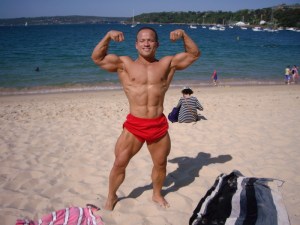
Front double biceps at my favourite beach here in Sydney, Australia.
Enjoying the sun and the creator that it is.
Be not like the moon, be like the sun.
Vv.

Studies show that after the big 3-0, your metabolism – the rate at which your body burns calories to function daily, begins to slow down, causing you to store more excess calories as unwanted body fat. A lot of men start storing a lot of ‘blubber’ around their gut and women tend to deposit it in the butt and legs.

Not what many people want.


Desire

What you want and what you get can be poles apart because of this metabolic reduction.

Your metabolism drops for several reasons, one of them being that you progressively lose lean body mass (muscle) each year and your strength levels drop as you get older. That is why it is so important to ‘off-set’ this ageing effect or rate is by doing strength training and promoting protein synthesis and muscle growth. For optimal health results you would try combining it with some sort of cardiovascular exercise.

What qualifies as cardio or aerobic exercise? Any activity that elevates your heart rate and trains your lungs to become more efficient at delivering oxygen throughout your body.

Back to our story – familiarity is important for us all. It was important for my gym pal. I get that. However, getting stuck in a holding pattern and doing the same workout for years which is not aligned with the goal (in this case ‘maintenance’), could imply that they are too scared to stray from a routine that works. People who do this though are forgetting that the routine may have worked once, yes, but in the past. It may not necessarily work now.

The truth is, sticking with what works doesn’t always work.

A few happy High School dropping by the gym on their way to their High School Formal.
Just to show off their beautiful outfits…. and hard-earned muscles making the clothes look great.

It could be holding you back.

The above could apply to many areas of life too, but in this instance, I am relating it to the successful achievement of your physical transformation goals. Whether your goal is to burn fat, build a stronger, bigger chest or put on mass. All these achievements is just your body’s physiological and biological response to the various stimulus you place on your body’s muscles in your exercise routine.

It is through adaptation that the body morphs or changes. These adaptations eventually cease as your body handles the stresses or stimulus more efficiently. The result? Well, the body’s response to the workout you have been routinely doing for twenty years or so is not doing you any good. Your body ‘knows’ your workout so well now. Basically, you are getting less for each successive workout.

Because your muscles are not being forced to adapt, your metabolism or ‘engine room’ drops and you start burning fewer calories. You wonder why you’re not losing weight or fat or putting on muscle like you used to. You use fewer muscle fibres during your workouts, and this would leave you an unsatisfying taste in your mouth as the results you get is less than what you desired. Not motivating. Very frustrating!

So, sticking with what works is not always the best when it comes to achieving exercise goals.

How do you break this awful cycle, you may be asking?

One word: variety.

In a future blog, I will give you a few alternative exercises to the basic average beginner’s training program outlined in an earlier blog How much time do you have for a workout?” This will add variety as change is needed.

You don’t need to make wholesale changes. Sometimes, just replacing one key exercise with an alternative can feel different enough to make your body think its trying something entirely new.

Be brave. Embrace change.

Change is always part of a good exercise program. Managing change is important.

A good workout program is like life: life is about change – if you’re not changing, you’re not living. So, don’t always stick with what works if maintenance is your goal. Instead, spice it up with a little variety. A little change.

Train SMARTER!

Until next time,


Photos below: in the thick of contest battles in the recent past.

You win some. You lose some. One thing’s certain, you have to be prepared to lose – to win! DSCF9304

My version of the Incredible Hulk!

Standard
body, Body shape, body weight, Goals, life, mind, muscles, Strength training, time, workout, you

How much time do you have for a workout?

_MG_9779-1Doing something – anything, is ALWAYS better than nothing.The time you spend exercising and working on your health and fitness goals within a structured program should be viewed as an investment and not as an expense. It is akin to putting aside money in the bank. Everything adds up, every bit of exercise you do – counts.

However, people struggle to find time to go the gym.

But how much time is enough time? How much time do you believe you should have to able to have a meaningful workout? 10 minutes or 20? How about 30 minutes, maybe 1 hour or 2 hours? So, because people perceive that they need a massive 2 hour block to get a meaningful workout done, people don’t go. That’s like not putting a few dollars aside each time in your piggy bank when you have a few dollars available for saving and instead only saving when you have a cool one hundred thousand or a million dollars to bank. Odds are you’ll never save even if you finally had that huge sum of money to.

Its not how much time that matters but its what you do in that time and how you train. Basically how efficient and effective your exercise routine is. Experience and know how is an important factor to getting the most out of each minute you spend in the gym and I am not going to lie to you: not having as much time to exercise does mean that it may take you longer to see the results you’re gunning for.

But doing something – anything, even if all you have to spare is 20 minutes a week, will take you one small step closer to realizing your goals. It also means you won’t work as hard when you finally have a bit more time to exercise.

So, you only have a maximum of 30 minutes to spare in the week? So what? If that is all you can spare, then what if I told you that you already have enough time to serve your body (and mind) what it desperately needs. Obviously, there are many variables at play here when you’re venturing in to un-chartered territory if you have never been to the gym before.

Don’t fear, the exercises I am listing below is BASIC and when done with control and feel, risk of injury is relatively low. Regardless of what you look like or how fit you are – or what you visualize yourself looking like later, start with the exercises listed below for your 30 minute workout.

You can kick-start part of your New Year’s Resolutions using this. The key word here is: START.

Exercise Sets Reps What it works Specifically
Squats 2 10 Legs From your butt to your calves
Bench Press 2 10 Chest/shoulder/triceps Upper body
1-arm dumbbell row 2 10 Back Upper/middle and lower back
Upright rows 2 10 Shoulders/traps
Seated triceps extension 2 10 Triceps  The back of your arms
Biceps curls 2 10 Biceps The front of your arms/forearms
Crunches 2 15 Abdominals  “6-pack”
* Weight to be used for each exercise should allow you to get to the recommended rep range. If unsure please seek help from a suitably experienced and qualified professional.

The above workout plan is very basic and for the average beginner. Always workout with safety in mind. The reason it works is that when combined, these movements achieve a full-body workout that is very efficient and effective if you perform them within the 30 minutes you have available.

Working out acts as insurance for your muscles, making sure you don’t have to challenge any of them by accident. It also lowers the risk that you don’t fall in to the trap of working only the ‘mirror muscles’ – chest/shoulders/biceps that young men typically over-train in the gym. You set a foundation towards balance and symmetry which helps build a better body and significantly lowers risks of injury to your joints.

The program uses compound exercises – where several muscles work together, instead of isolation exercises which work only one muscle group. For example, doing the squat with proper form, your whole body has to pitch in. All your muscles in your body is turned ‘on’ and is required to work equally for a complete, balanced look. These compound exercises are more effective and practical for building lean muscle fast, because they work more muscle fibres in a shorter period of time. They also teach your body to work as ‘one unit’.

Working out efficiently and effectively is like a good rugby/football team: the forwards or big men lay the platform before the smaller, lanky, faster, smaller men out wide get involved for a winning combination and try/touchdown.

The best exercise programs are always designed to work the larger muscle groups first (legs, back, chest) and then smaller muscle groups (shoulders, triceps, biceps, calves and abs) last.

That’s all you need to know for a winning workout if you have 30 minutes to spare in the week for your investment in your health, strength and fitness. If you are looking for other products/options that may suit your needs better, have a look at some of these under my ‘training program packages’ tabs.

Consistency and persistence are also key variables in the achievement of your physical transformation goals.

Good luck!


Until next time,

Training efficiently and effectively under the “safety umbrella ☔️ “ helped me get to 2 x world 🌎 championships
The conservative approach to training is always the best way in the long term


Standard
body, Body shape, body weight, diet, Fitness, habits, mind, time, you

What percentage of your weekly meals are bad for you?

Relaxed me

We have all heard the saying “you are what you eat”, haven’t we? Well, there is an element of truth there.

You cannot transform your physique from where you are to where you would like to be without getting handle over your nutrition and what you’re actually letting in your mouth. A very important aspect in the success of over 80% of my client’s have had of the years – is managing your diet better.

As we are essentially all creatures of habit, I have found when I look at client’s diets that most people spend their weeks eating the same meals over and over again. That can be good. Let me explain.

Good because if 70 percent of the meals (solids and liquids) you eat is bad or unhealthy for you then it is highly likely that your next meal would be unhealthy, too. Now what is the best way to find out your weekly bad meals ratio? Well, simply keeping a diary of all meals you consume every day. Do this for 7 days and identify all the ‘bad and unhealthy’ meals that you consume. Mark it off on paper. Assess your good/bad meals percentage. What is your daily bad meal percentage and what is your weekly percentage or ratio?

What do you do next? Well, lets keep it simple and take things one step at a time. Try getting rid of just one ‘bad’ meal  per day and replacing it with a ‘new’ healthy meal to your weekly repertoire. Stick to this one change. Try sticking to it for a few weeks and aim for a month or two and observe how this little healthy change can and will have a positive impact on your body, possibly encouraging you to boosting your ratio and percentage of healthy meals even further. One meal at a time.

This positive little step-by-little step approach, gradually becomes a part of your daily life without making you completely conscious of it. This, I think is better than spending more and more time examining  food labels for nutritional information for everything that you eat that you see a lot of people doing these days. It isn’t always the easiest thing to do and maintain. Besides, food labels can be quite confusing, even for the best of us.

Try this method if you’ve been wanting to help yourself but didn’t know where to start as it may just be as effective in keeping your eating habits under control and helping you lose fat and stay healthy, one good meal at a time. It won’t happen overnight but it will happen if you will it to.

There is power in habit. Believe in it.

Become aware. Apply action. Adapt accordingly.


Until next time,

Standard